Styracosaurus
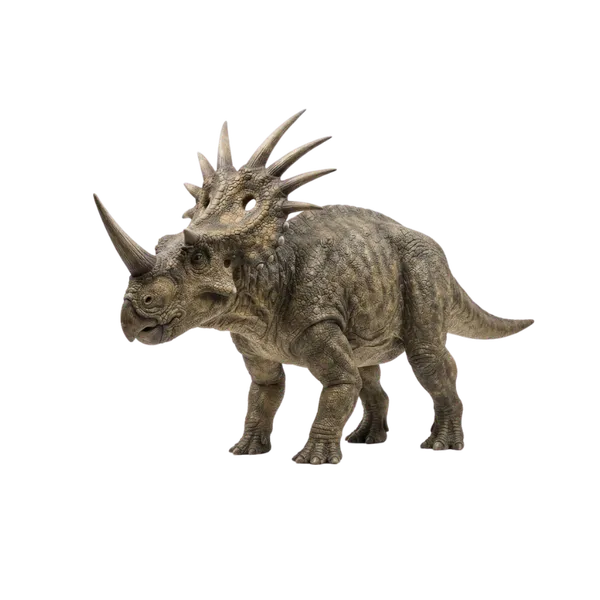
Imagine a living prehistoric fortress the size of a giant truck, its head adorned with a fan of long horn spikes and a half-meter horn on its nose! The Styracosaurus is one of the most impressive and horned dinosaurs, whose name translates to "lizard with a spiky frill."
Who was Styracosaurus?
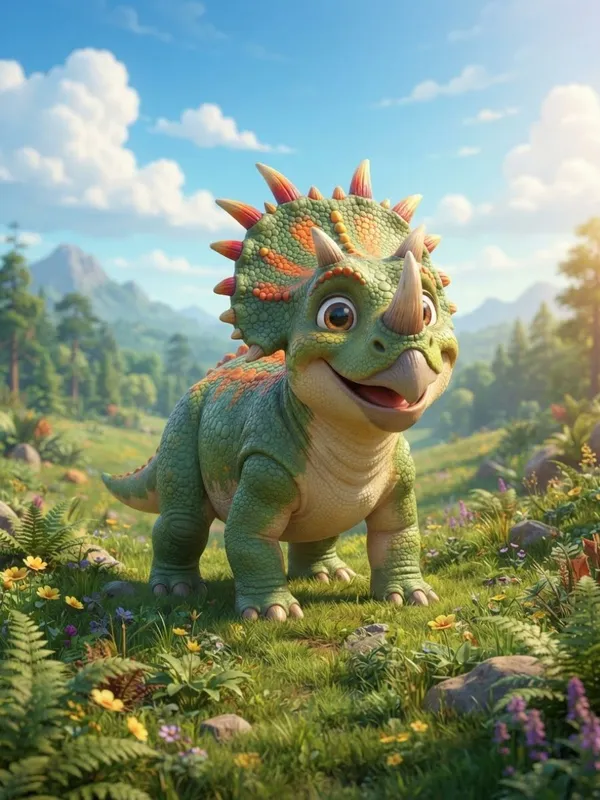
Styracosaurus was a large herbivorous dinosaur from the Ceratopsidae family (a relative of Triceratops) that lived in the Late Cretaceous period, about 75 million years ago.
Mysterious name: "Spiky Lizard"
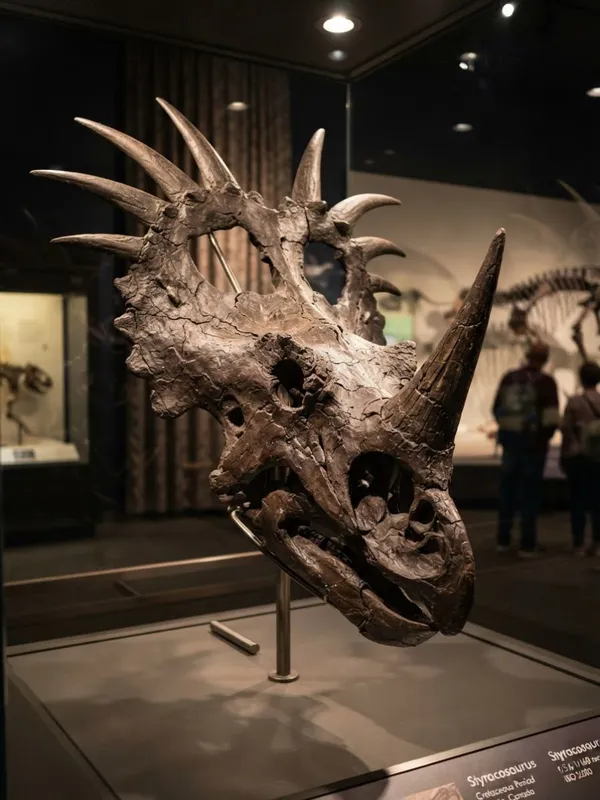
The name Styracosaurus comes from ancient Greek words meaning "lizard with spear points" or "spiky lizard." It received this name due to its incredible bony frill at the back of its head, adorned with long, sharp spikes.
Size: A walking fortress
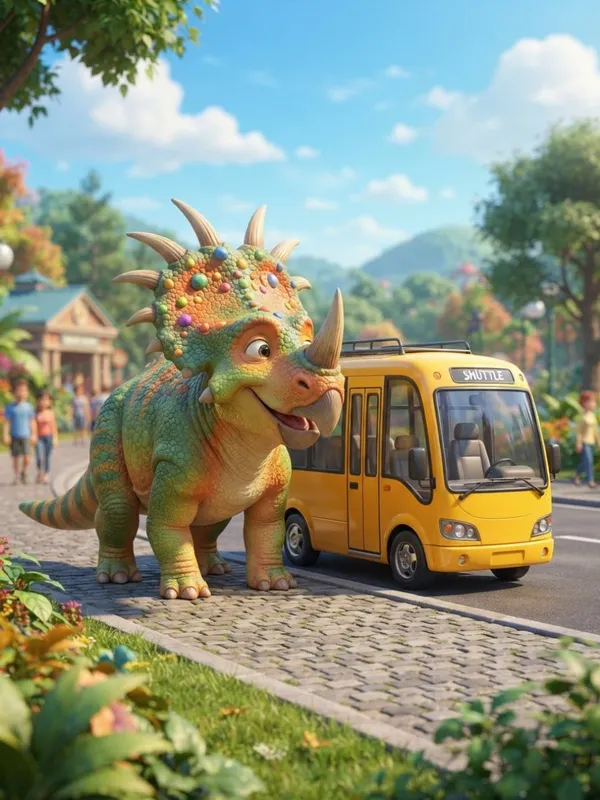
Styracosaurus was a strong and massive dinosaur: it reached 5.5 meters (like a large modern minibus) in length, stood 1.8–2 meters tall, and weighed about 3 tons—just like a heavy African rhinoceros!
Where did it live and where were its fossils found?

Styracosaurus lived in what is now North America (mainly in Alberta, Canada, and Montana, USA). At that time, it was home to warm coastal plains with lush forests, swamps, and wide rivers.
Giant nasal horn: A dangerous blade
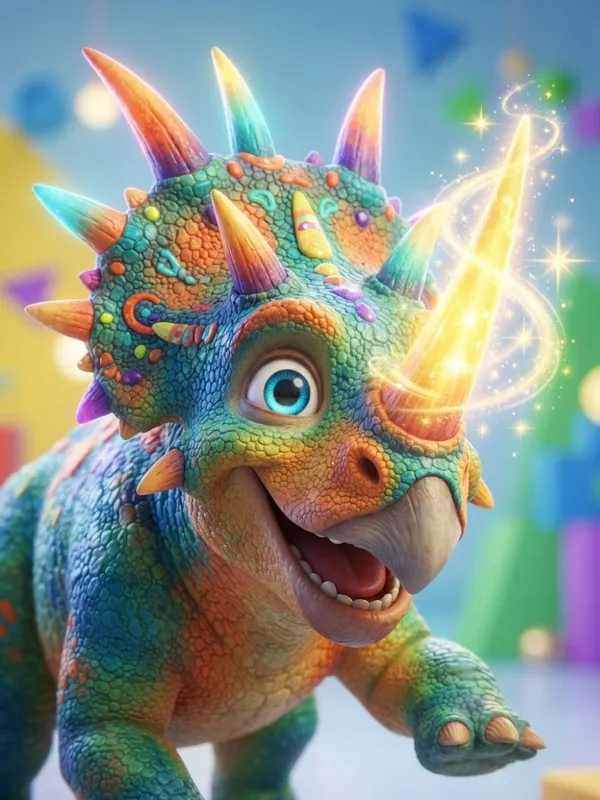
On its nose, Styracosaurus had a single large, slightly curved horn almost 60 centimeters long (longer than a school ruler!). This horn was its main weapon for defense against dangerous predators, such as Gorgosaurus and Daspletosaurus.
Royal crown-frill
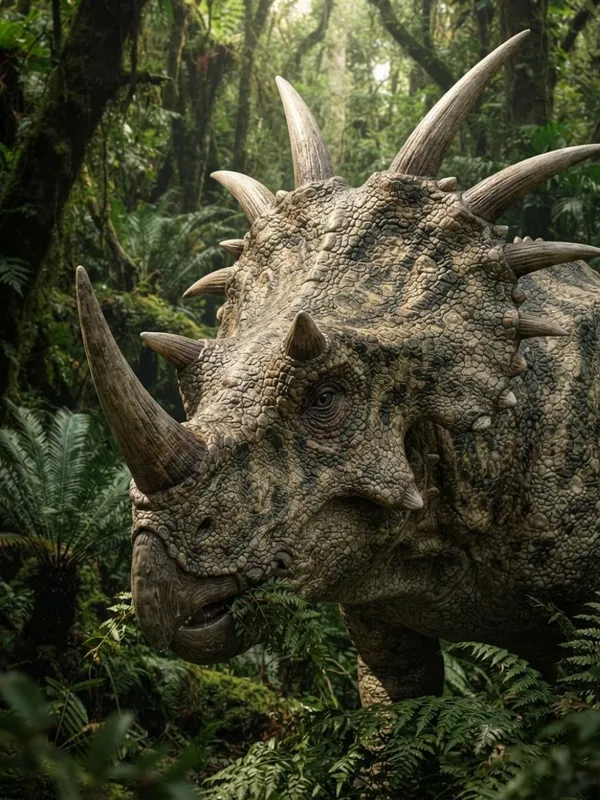
At the back of the Styracosaurus's head was a strong bony shield (frill), from the upper edge of which protruded 4–6 long spikes (each up to 50 cm long). Scientists debate the purpose of this frill: for neck protection, for display to conspecifics, or for regulating body temperature.
Parrot beak and powerful teeth
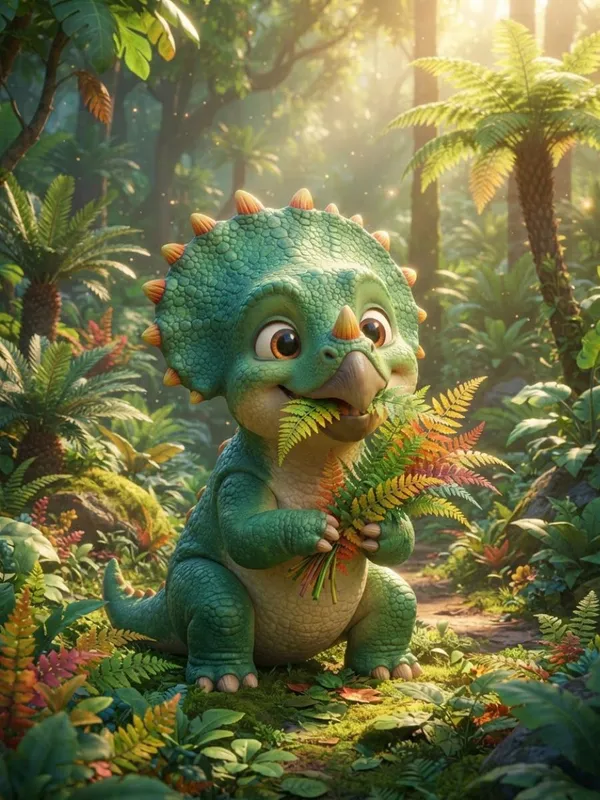
The Styracosaurus's snout ended in a strong and narrow horny beak, which it used to easily cut tough branches of ancient ferns, palms, and cycads. Deep within its jaws were dense rows of teeth that functioned like actual garden shears.
Life in a herd: Safer together!
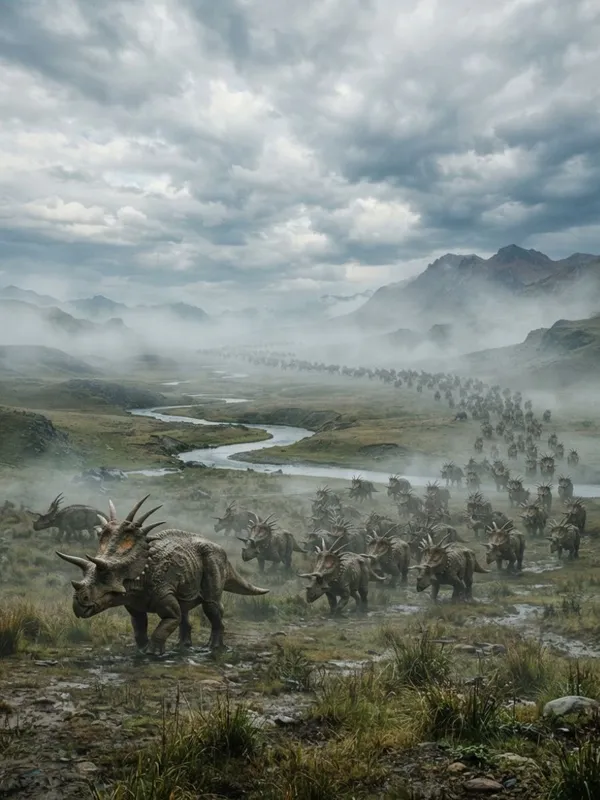
Paleontologists find large burial sites with the remains of dozens of Styracosaurus in one place (bonebeds). This indicates that Styracosaurus were social animals, lived in large herds, and migrated together in search of fresh vegetation.
Fun mini-story:
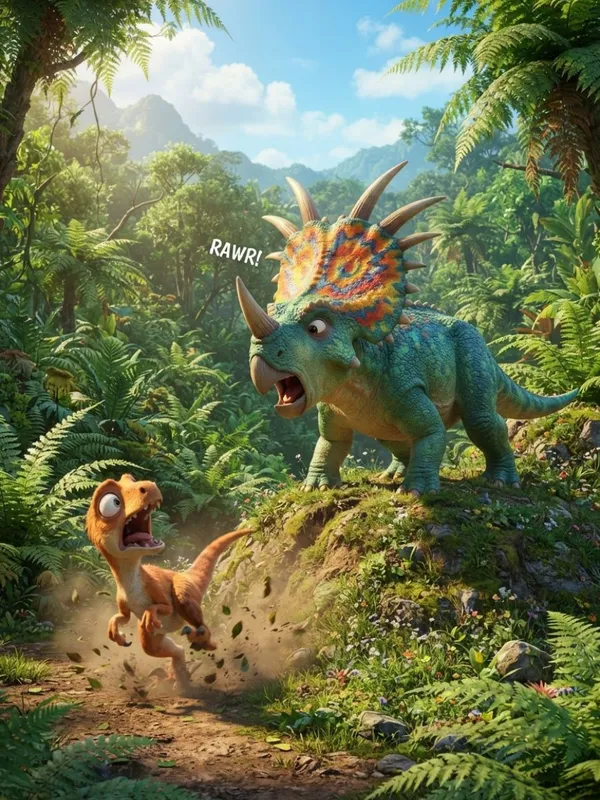
"How Styracosaurus Stick lit up the sun-frill" Little Styracosaurus Stick loved to hide in tall ferns. One day, a curious young predator crept up to him. But Stick didn't lose his nerve: he turned to the sun, raised his head, and proudly spread his spiky frill. In the sunset rays, his horns and spikes lit up with a bright pattern, and his nasal horn gleamed menacingly! The predator thought it wasn't a small dinosaur, but a real fairy-tale dragon with a horned crown, yelped in fright, and ran off into the bushes.
Interesting fact for children:
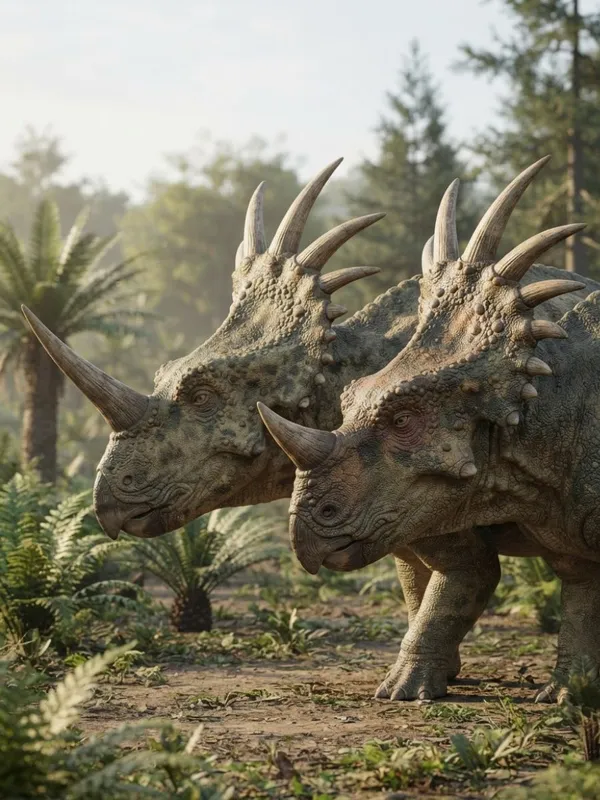
"Every frill is unique!" Scientists noticed that the shape and number of spikes on the Styracosaurus's frill varied slightly among individuals, just like human fingerprints! In some dinosaurs, the spikes were straight and long, while in others, they were slightly curved outwards.