Spinosaurus
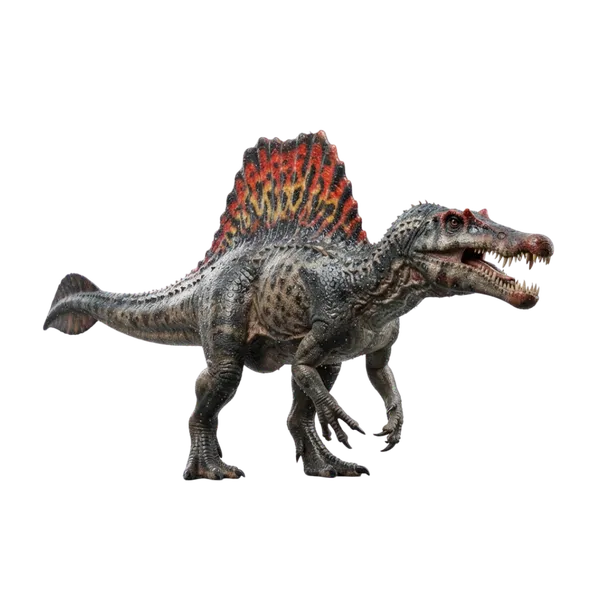
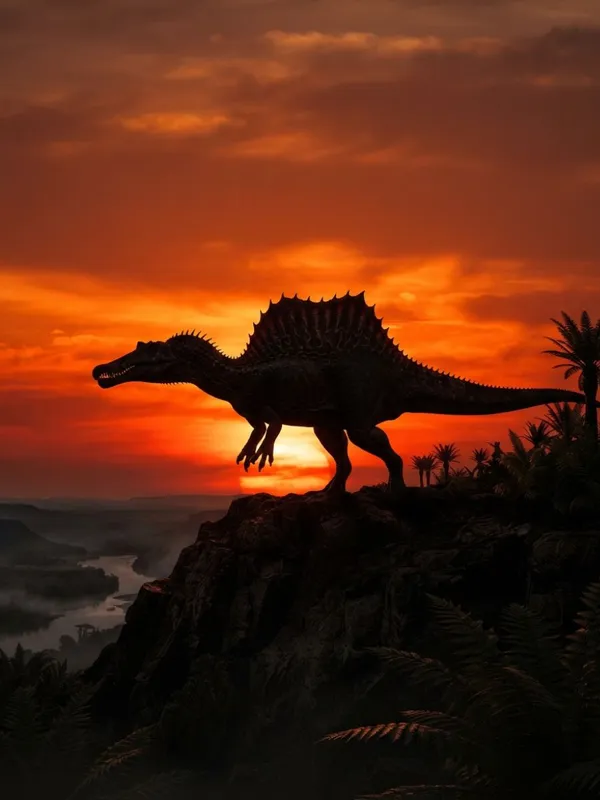
Imagine a colossal predator, even larger than a Tyrannosaurus, yet as comfortable in water as a crocodile! The Spinosaurus was the most unusual and enigmatic hunter of the ancient world. With its enormous sail-like fin on its back and a long, crocodile-like snout, it reigned both on land and in the river depths of prehistoric Africa.
The Largest Land Predator.
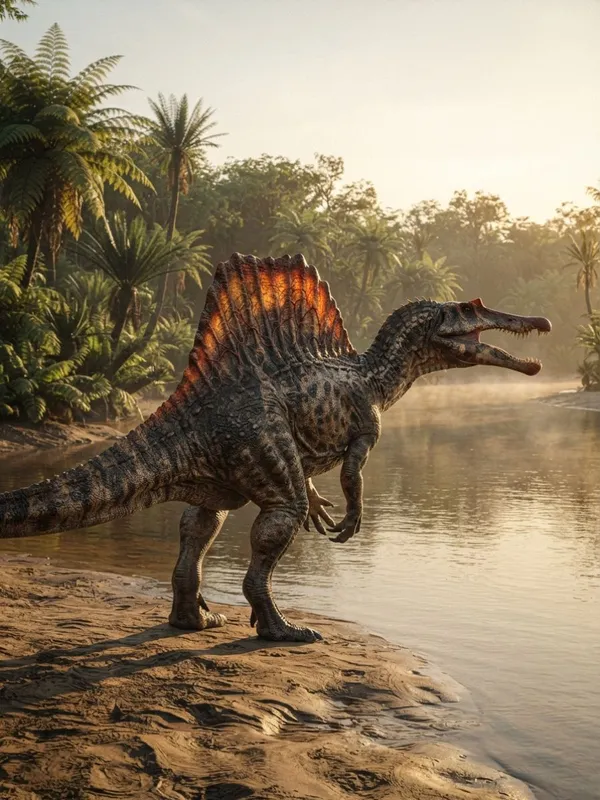
The Spinosaurus was the longest carnivorous dinosaur ever to exist on Earth! It could reach lengths of 14–15 meters, surpassing even the famous Tyrannosaurus Rex in size.
A Giant Sail on its Back.
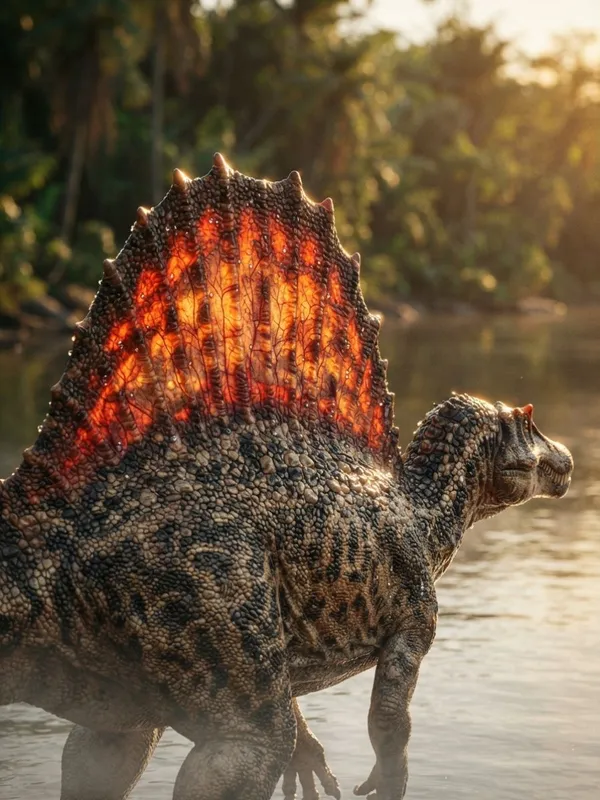
The Spinosaurus's main distinguishing feature was a gigantic sail, up to 2 meters tall, formed by long bony spines extending from its vertebrae. Scientists still debate its purpose: perhaps for thermoregulation, attracting mates, or to appear even larger to rivals.
The First Swimming Dinosaur.
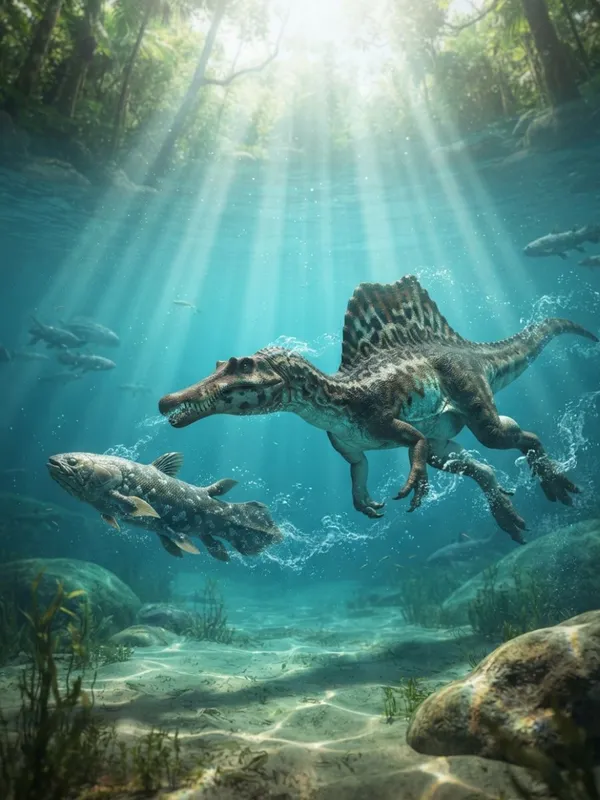
Unlike most of its relatives, the Spinosaurus was a true semi-aquatic river monster. It spent most of its life in the water, hunting massive prehistoric fish.
A Crocodile-like Snout.
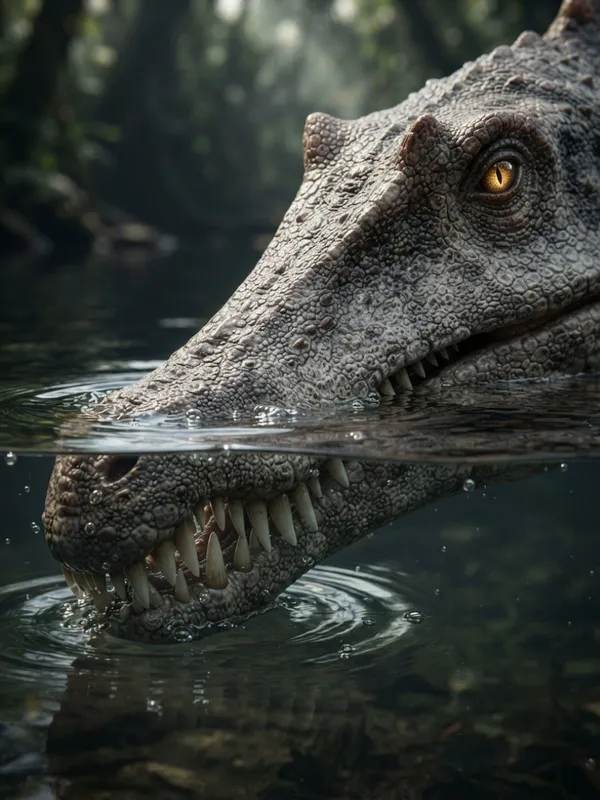
It possessed a narrow and long mouth with slender, conical teeth, perfectly adapted for gripping slippery prey — much like modern crocodiles.
A Paddle-like Tail.
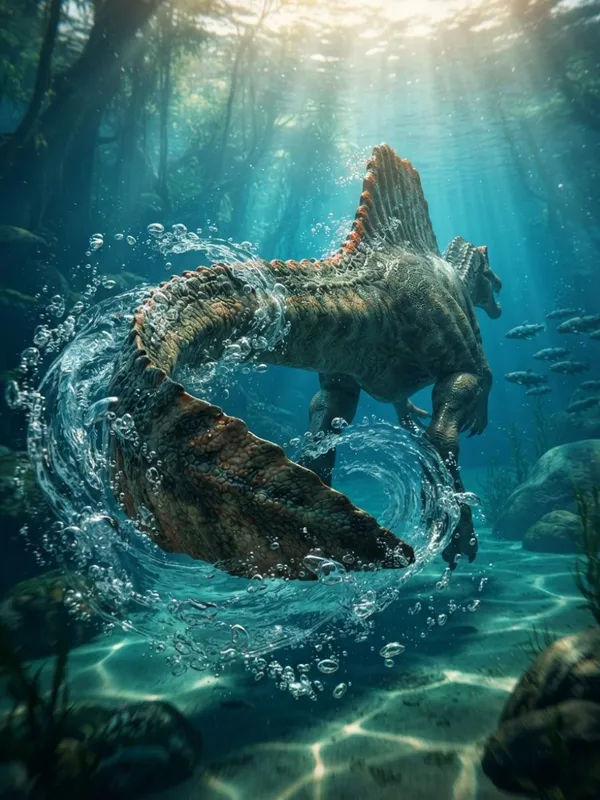
Recent discoveries have shown that the Spinosaurus's tail was broad and flat, resembling a flexible paddle or a newt's fin. With it, the dinosaur propelled itself effectively and moved quickly through the water.
Sensitive Locator Snout.
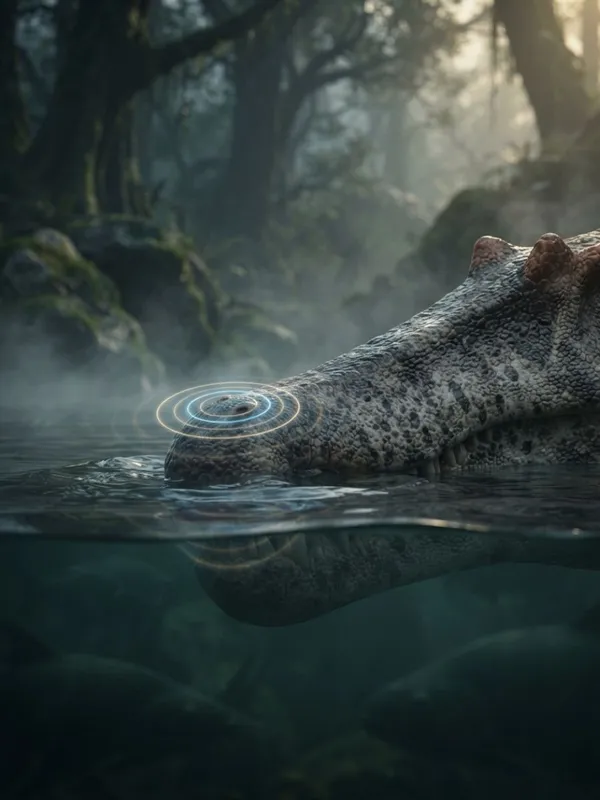
At the tip of the Spinosaurus's snout were special nerve endings and pores. These functioned like a built-in sonar, allowing it to detect even the faintest movements of fish in murky water.
Dangerous Powerful Claws.
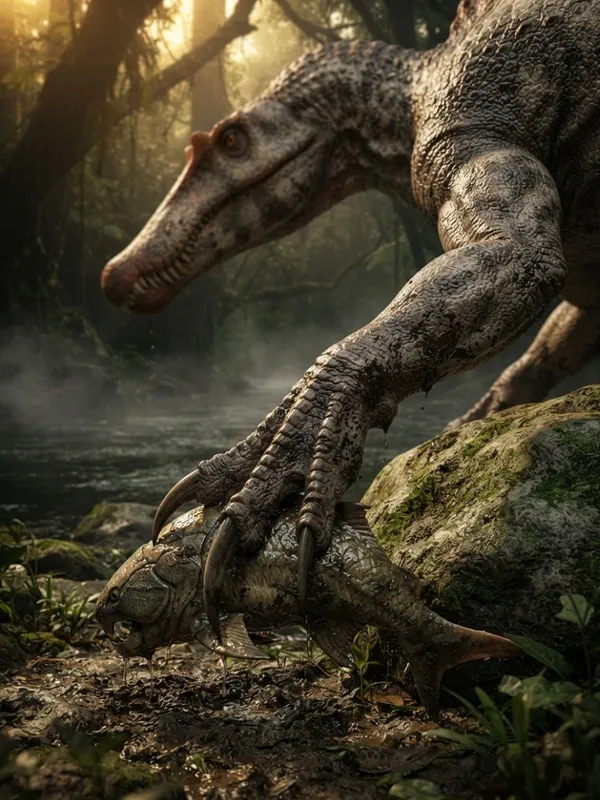
Unlike the 'short-armed' Tyrannosaurus, the Spinosaurus had long and very strong forelimbs with enormous, curved claws, with which it could easily hold onto any struggling prey.
Dense 'Diving' Bones.
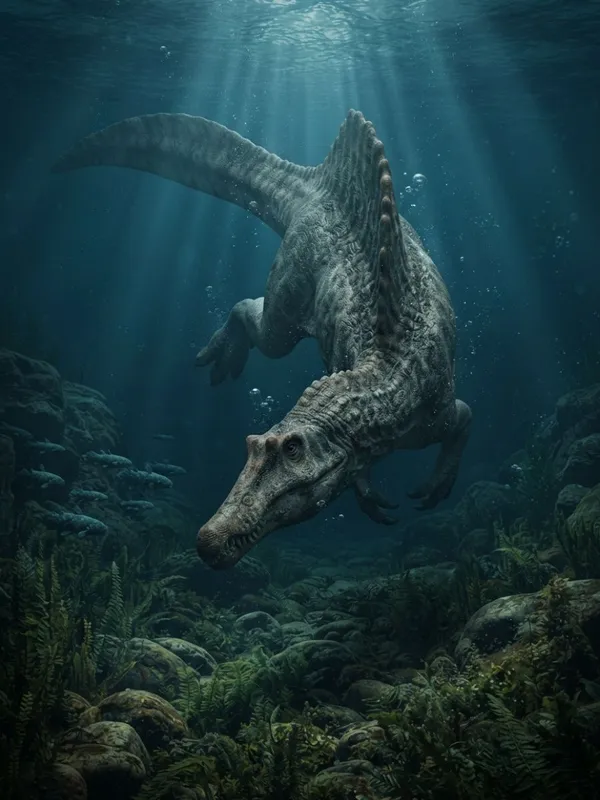
The bones of the Spinosaurus were not hollow inside, like those of most other theropods. They were dense and heavy, acting as a natural ballast that helped it submerge underwater.
Spiny Lizard.
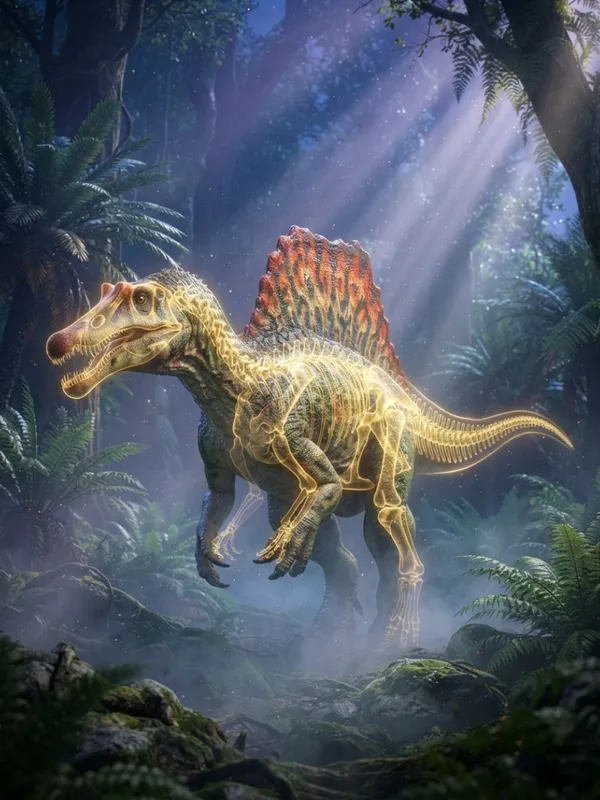
The name 'Spinosaurus' literally translates from Greek as 'spiny lizard' or 'thorny lizard' due to the long bony processes on its spine.
A Lost Historical Enigma.
The first discovered Spinosaurus bones were destroyed during World War II in the bombing of a museum in Munich. It took scientists many decades to reconstruct its appearance from new and rare findings!