

The Whale Who Swallowed a Radio
🐋 What would happen if the world's largest whale accidentally swallowed a radio? Barnaby, a lonely blue whale, finds an unusual object in the ocean and begins broadcasting classical music across all the seas! Dolphins dance to the tunes of Bach and Beethoven, sharks pause in wonder, and scientists are baffled. Will humans manage to unravel the mystery of the singing ocean, and will the radio remain with the whale?
23 pages 7 min read
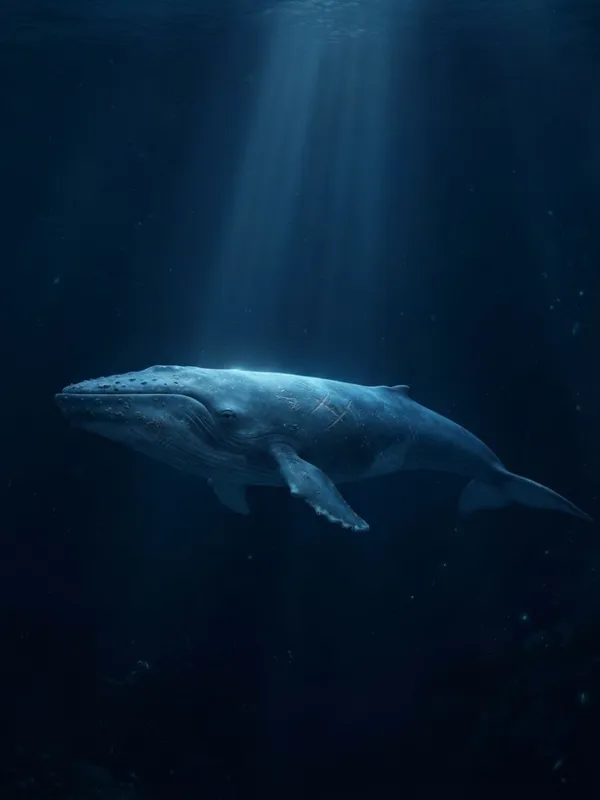
In the deep blue waters of the Pacific Ocean lived an enormous Blue Whale named Barnaby. He was longer than three school buses, weighed as much as an entire fleet of trucks, and his spout shot water higher than the tallest tree. Barnaby was very kind-hearted, but terribly lonely.
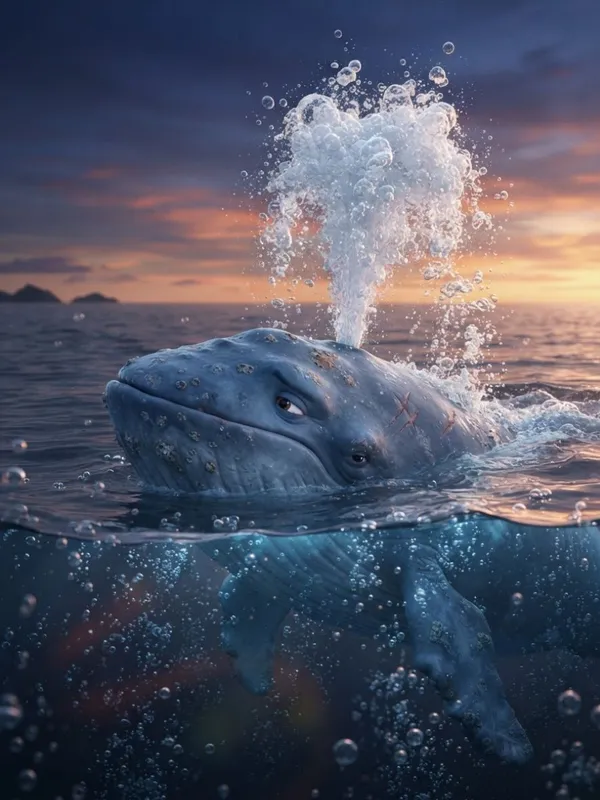
Most of the time, he swam alone, sighing sadly and releasing huge bubbles into the sky. All the other whales around sang their usual whale songs — low, resonant, and a bit monotonous. Barnaby, however, yearned for something entirely different, though he didn't quite know what.

One day, a fierce storm erupted over the ocean. Waves rose to the sky, the wind howled, and a heavy wooden crate fell into the water from a large ship passing by.
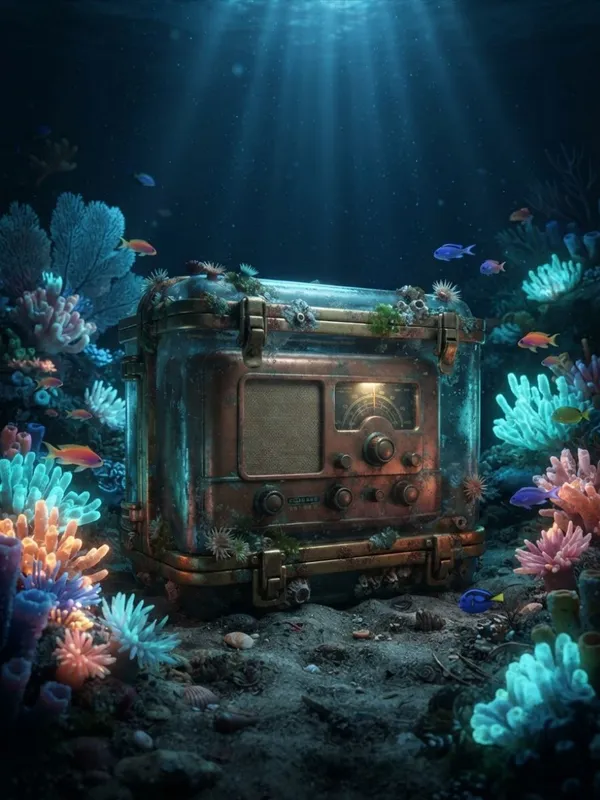
The crate crashed against the waves, broke apart — and at the very bottom of the ocean lay an extraordinary object. It was an antique copper radio receiver in a protective waterproof casing, which miraculously continued to function.
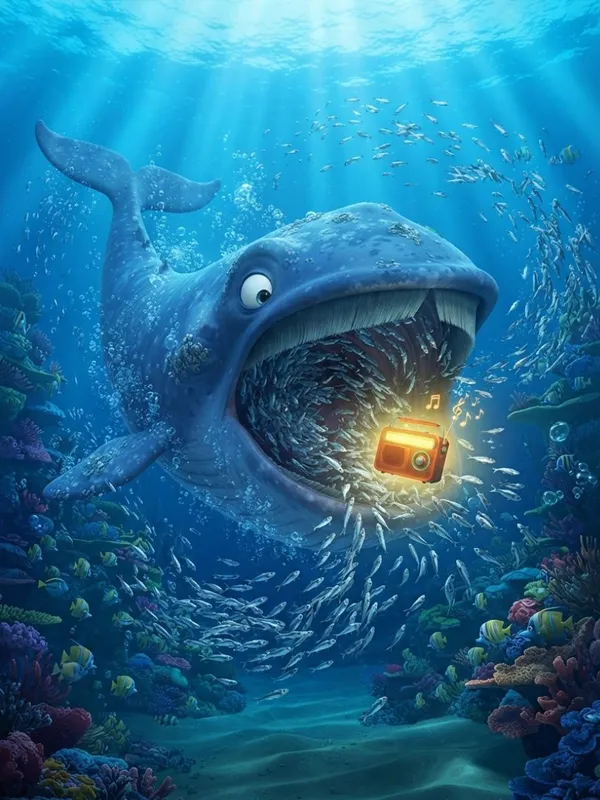
Barnaby was just swimming past and opened his mouth wide to swallow a school of small fish. Along with the fish, he accidentally swallowed this mysterious, shiny little box.
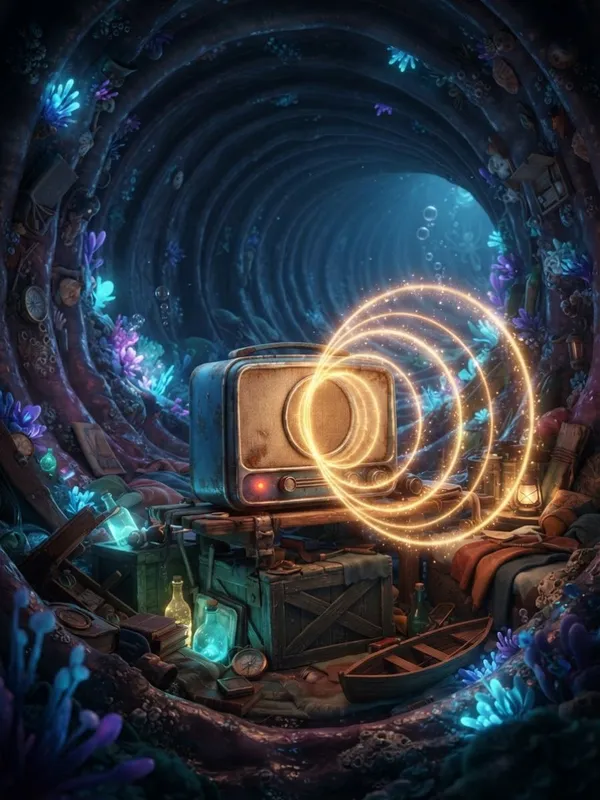
The whale let out a loud hiccup. Inside him, something clicked, a tiny light blinked on, and from the speaker, tuned to the radio wave of an old coastal station, music began to pour out.
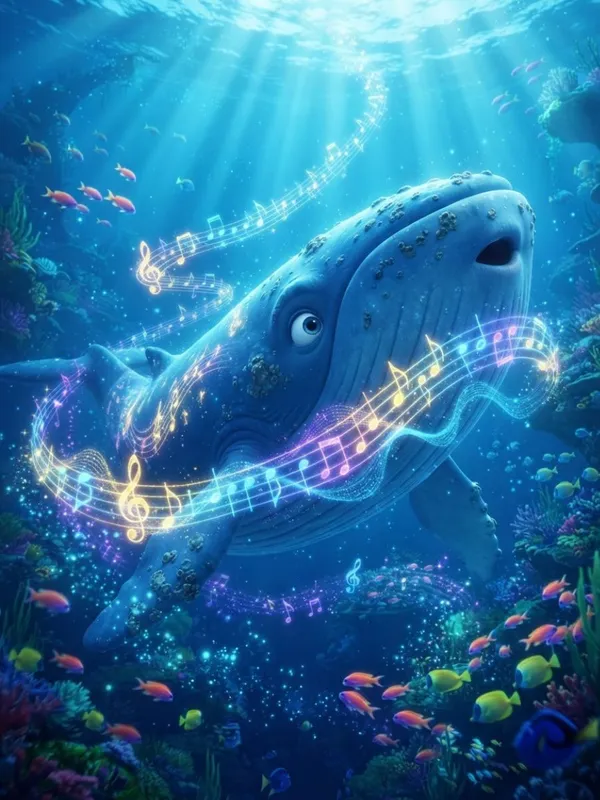
It was Beethoven's Fifth Symphony! Da-da-da-DUM! Da-da-da-DUM! — resounded right inside the enormous whale's stomach.
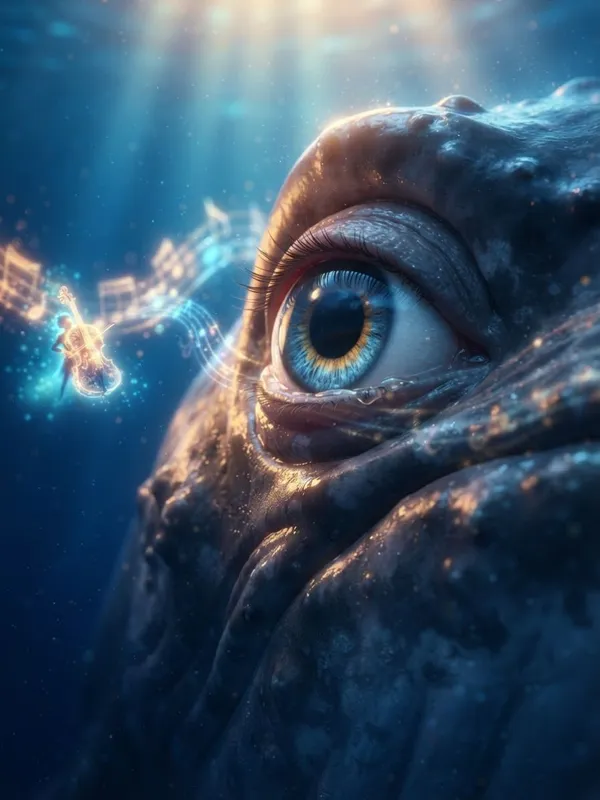
Barnaby froze in surprise. At first, he was frightened, thinking he had swallowed some angry sea monster. But the music was so beautiful, light, and majestic that it took the whale's breath away.
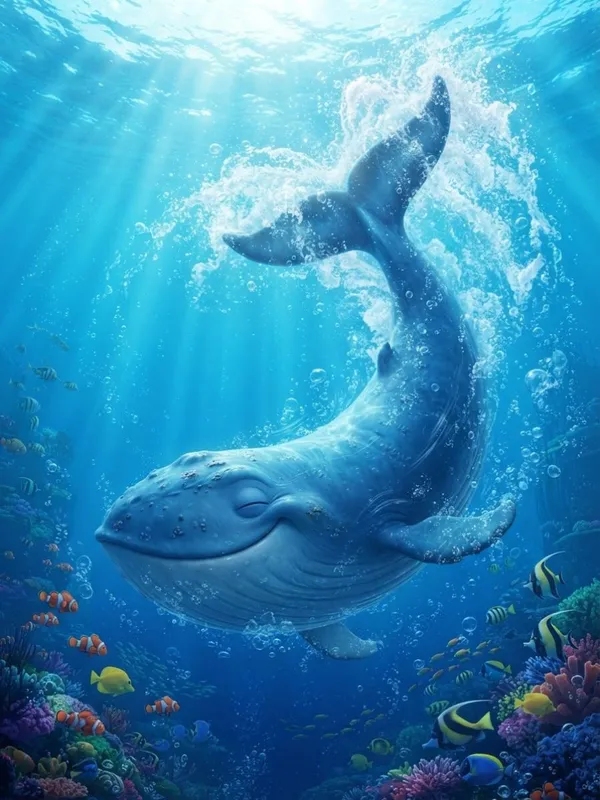
The sounds of cellos and violins echoed through his enormous body with a pleasant tremor. Barnaby began to spin in a watery dance, performing somersaults and churning foam with his tail.
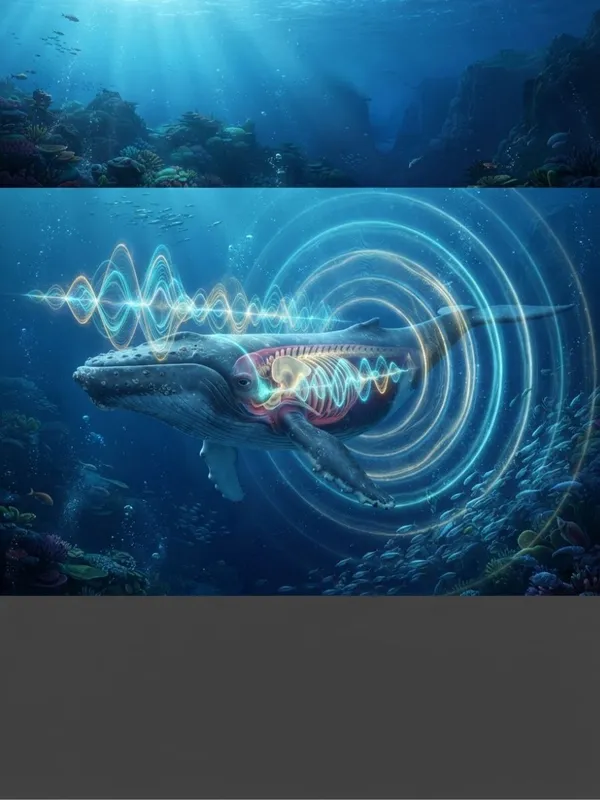
But the most astonishing thing was yet to come. The enormous body of the blue whale acted as the world's most powerful re-transmitter. The sounds from the radio receiver, passing through the whale's flesh, water, and resonating with ocean currents, transformed into incredibly powerful radio waves.

Barnaby opened his mouth and inadvertently amplified the radio signal with his nasal passages. Across the entire surface of the ocean, for hundreds of kilometers around, classical music began to emanate from the water! That day, fish and marine creatures were utterly astonished.

A pod of dolphins, cutting through the waves off the coast of Australia, suddenly heard a light waltz by Tchaikovsky. The dolphins exchanged glances, leaped out of the water, and began to twirl in synchronized pirouettes to the sound of violins.
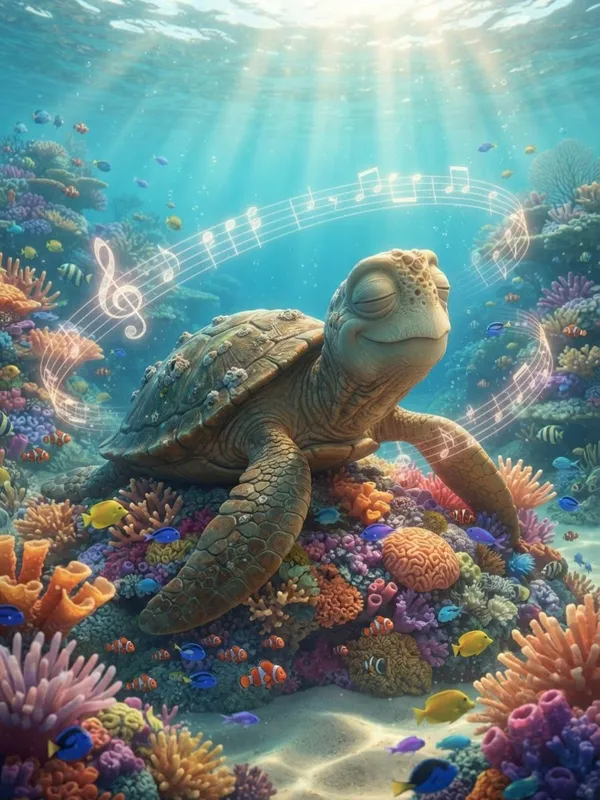
An enormous, wise sea turtle, dozing on a coral reef, heard the tender notes of a Chopin nocturne. She slowly extended her neck, closed her eyes, and swayed her head in time with the melody.
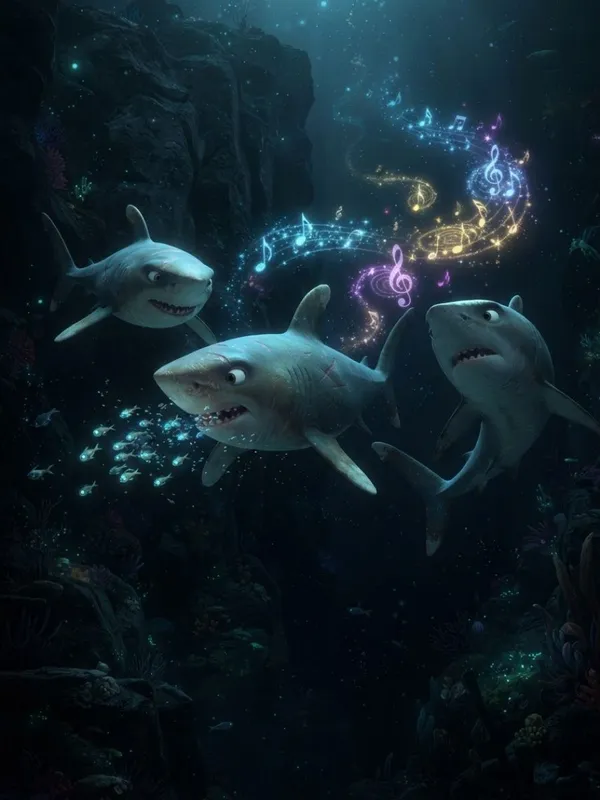
Even the grumpy sharks in the depths stopped chasing prey, froze in place, and listened intently to the wondrous sounds emanating from nowhere. No one in the ocean understood what was happening. Everyone thought that the ocean itself had decided to sing with human voices.

Meanwhile, Barnaby was swimming north, feeling like the happiest whale in the world. He was no longer lonely — now he was a living concert hall!

Every time he opened his mouth to release a jet of water, a new melody soared into the air. Sometimes it was lively Vivaldi, under which orcas frolicked, and other times it was tranquil Bach, lulling little crabs on the muddy seabed to sleep.
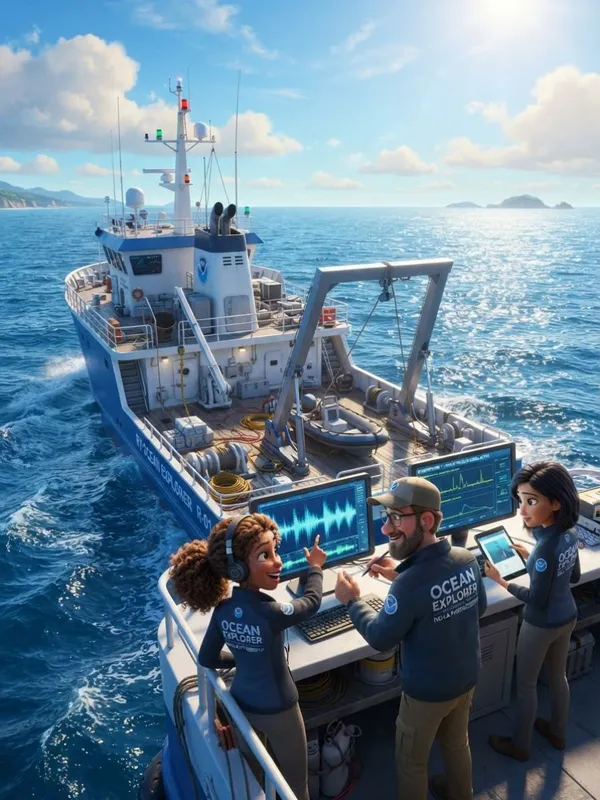
A week later, oceanographers arrived off the shores of the Pacific Ocean on a research vessel. They were detecting strange musical signals coming from the depths and attempting to unravel the mystery of the 'singing ocean'.
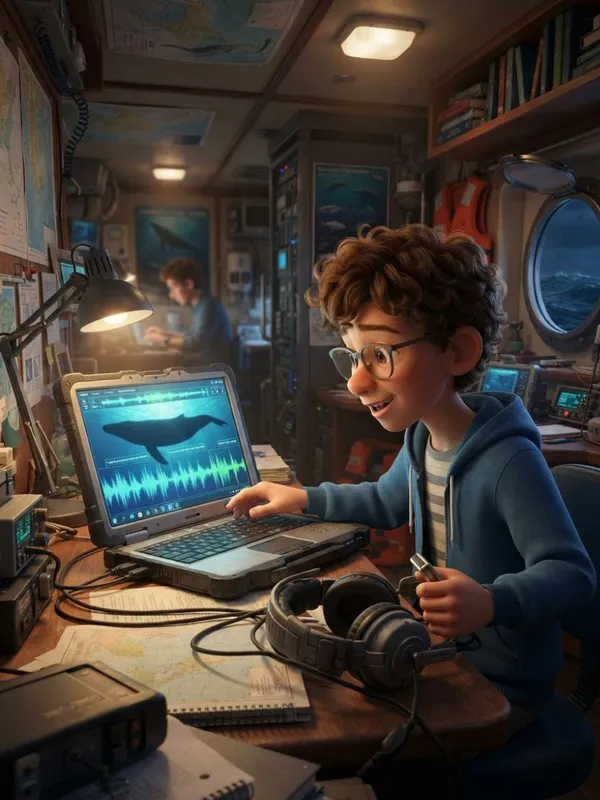
A young scientist named Leo looked into the underwater microphone-hydrophone and suddenly noticed a huge shadow on the screen, swimming next to a whale. More precisely, the sound was coming from inside the whale itself!
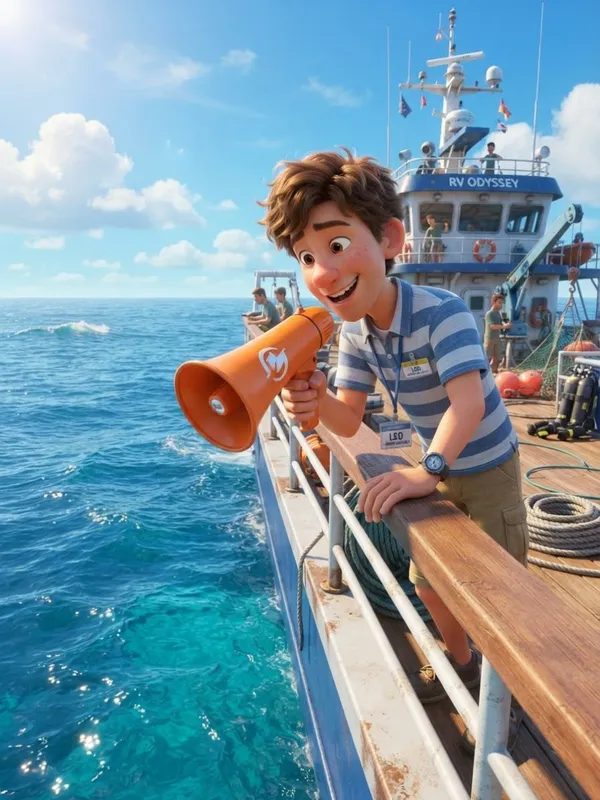
Leo picked up a megaphone and shouted into the water: 'Hey there, big blue friend! It looks like you've swallowed our old transmitter!'
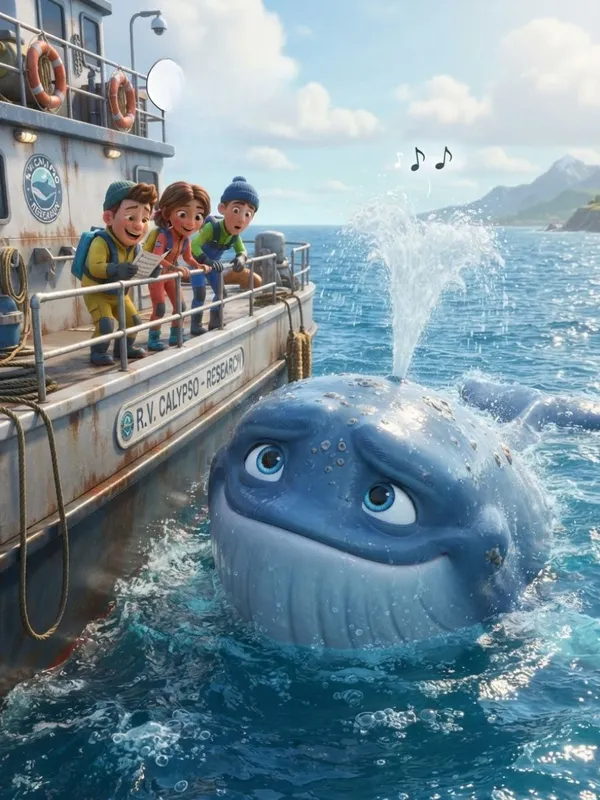
Barnaby heard the voice from above, surfaced, and released a beautiful fountain, from which, for a second, the final chord of an overture could be heard. The whale blinked his enormous eyes guiltily. He was afraid they would take the radio away from him and he would be lonely again.
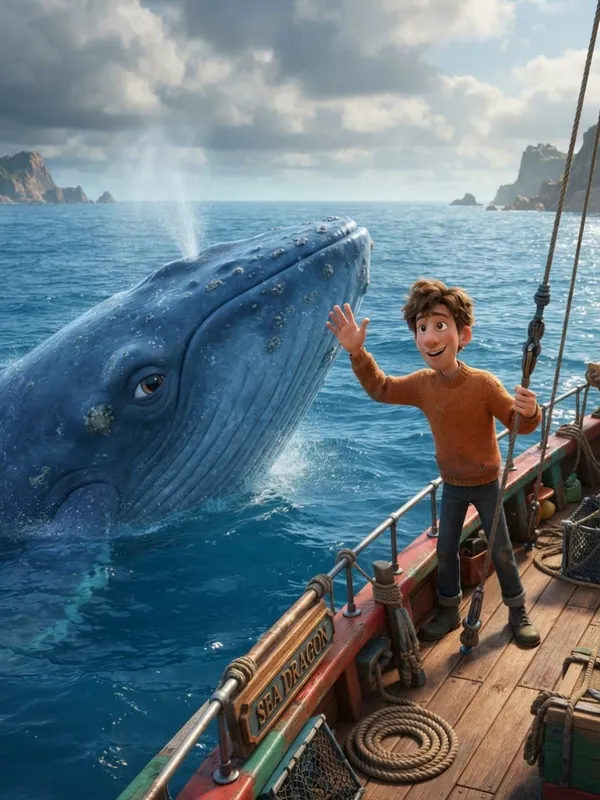
But Leo smiled and shook his head: 'You know what? Keep it. We've never had such an amazing orchestra before!'

From then on, Barnaby became a celebrity. Ships would deliberately sail closer to listen to his concerts, and whales from all over the world gathered to enjoy the wondrous music.

And if you ever find yourself by the sea and hear faint, elusive sounds of a violin amidst the crash of the waves — know that it's Barnaby swimming by, the whale who gifted classical music to the ocean.
The End
Did you like this story?