
Barnaby and Bamboo Creek
In the Bamboo Creek village by the Thuong River in Vietnam, the villagers dream of building a bridge to connect the banks. An old water buffalo named Barnaby becomes their helper, teaching them about diligence and the importance of working together.
20 pages 8 min read

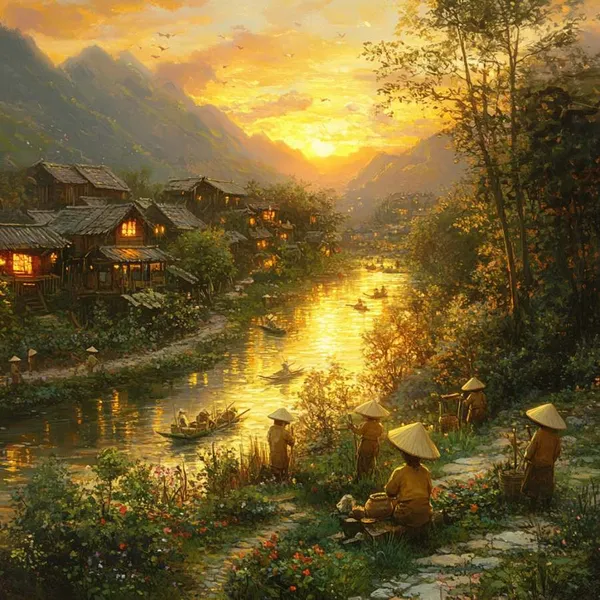
In a warm valley beside the Thuong River, where bamboo grew taller than a person, lay Bamboo Creek. Its inhabitants, Vietnamese people wearing traditional conical hats called 'nón lá', worked in the rice paddies every day, but the river divided the village in two, and crossing by boat took up a lot of time.

One day, the village elder, Grandpa Harold, gathered everyone in the square. His long white beard fluttered in the wind, and his eyes shone with determination. 'We need a bridge!' he announced. 'So that children from the west bank can go to school on the east, and traders from the east can get to the market on the west more quickly.'

Everyone nodded, but no one knew where to start. The bamboo was strong, but it had to be cut, processed, and tied together. And who would drag the heavy logs to the river? The villagers sighed: there was too much work.

On the edge of the village lived an old water buffalo named Barnaby. His coat was as gray as the morning mist, and his horns were as wide as the branches of a mango tree. Barnaby was lazy: he spent all day chewing grass and dozing in the shade of the bamboo, dreaming of doing nothing.
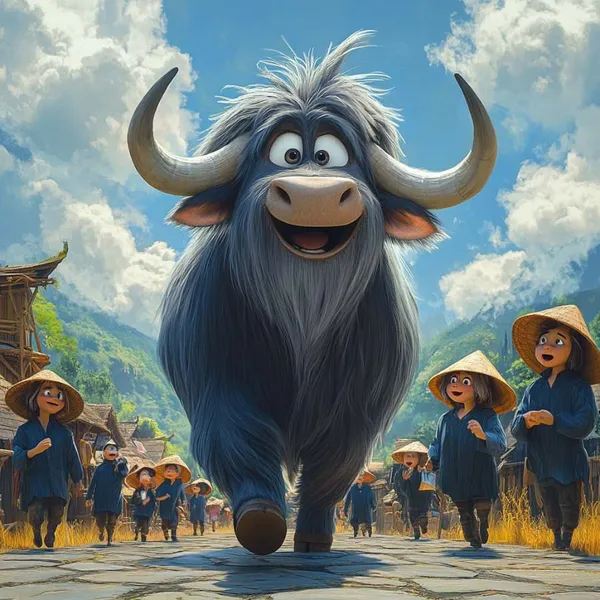
But that day, Barnaby overheard the villagers' conversation. He slowly approached the square, clomping his hooves. 'I'll help you,' he rumbled. 'But only if you work with me. I can't do it alone.'

The villagers were surprised. Barnaby, who never lifted a blade of grass, wanted to help? But there was no choice. They agreed. Grandpa Harold smiled: 'Good, Barnaby. Let's start tomorrow at dawn.'
The next morning, as the sun just touched the rice paddies, the villagers gathered by the river. Men cut bamboo with sharp machetes, women braided ropes from vines, and children collected stones for the supports. Barnaby dragged huge bamboo trunks, puffing with exertion.
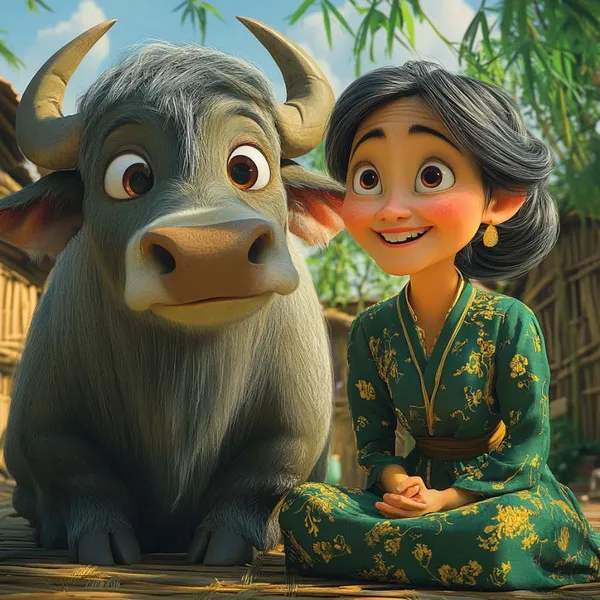
By lunchtime, Barnaby was tired. He lay down in the shade and muttered: 'Why can't I just eat 'phở' and watch you work?' Everyone laughed. Phở – a traditional Vietnamese soup with noodles and beef – was the village's favorite dish, but it was only eaten on holidays. 'Work, Barnaby, and we'll treat you to a bowl of phở tonight!' promised Auntie Lily, the best cook in the village.

Barnaby got up, inspired by the promise. He dragged the bamboo faster, and the villagers, seeing his efforts, sped up too. By evening, they had built the first support for the bridge. The children clapped their hands, and Barnaby snorted proudly: 'I knew I was a great builder!'

The next day, the work continued. But then a problem arose: the bamboo had to be dragged across the river to connect the banks. The boats were too small, and the current was too strong. 'What should we do?' sighed young fisherman Michael.

Barnaby looked at the river and said: 'I'll carry the bamboo on my back. But I need your help to hold it steady.' The villagers were surprised, but they believed the buffalo. They tied the bamboo with strong vines and laid it on Barnaby's back.

Barnaby entered the water, and Michael and the other men held the bamboo to keep it from falling. The water reached Barnaby's neck, but he moved forward, step by step. The children on the shore shouted: 'Go, Barnaby! You're the strongest!'

When Barnaby reached the other bank, everyone cheered with joy. The bamboo was in place! Now they could start building the bridge itself. The villagers worked in harmony: some laid the bamboo, others tied it with ropes, and still others strengthened the supports with stones.
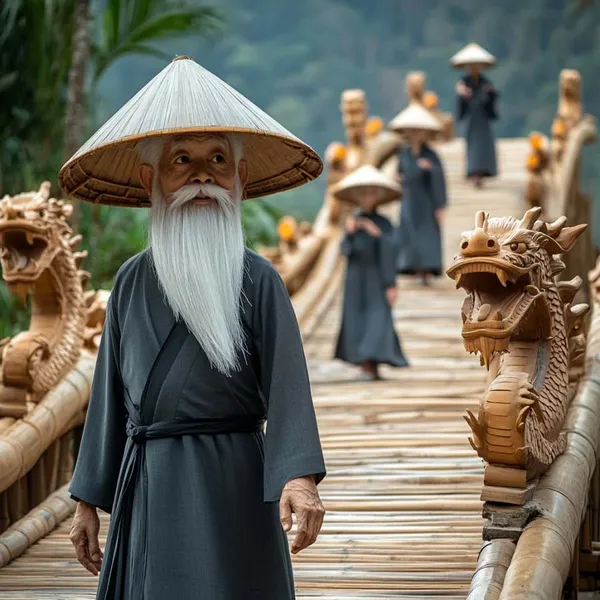
After three days, the bridge was finished. It was not only strong, but also beautiful: the bamboo railings were decorated with carved patterns of dragons – a traditional Vietnamese craft. Grandpa Harold crossed the bridge first, followed by all the villagers, laughing and singing songs.
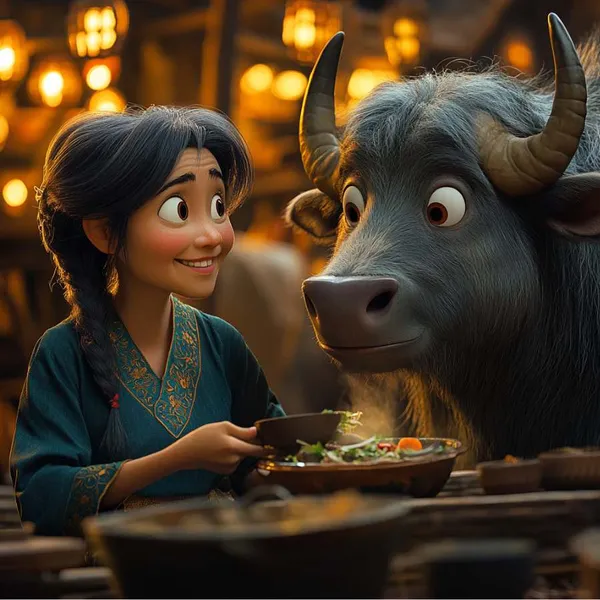
In the evening, the village held a celebration. Auntie Lily cooked a huge pot of phở, and even Barnaby got his bowl. He ate with pleasure, and then said: 'You know, I thought being lazy was happiness. But working together with you turned out to be much tastier than phở!'
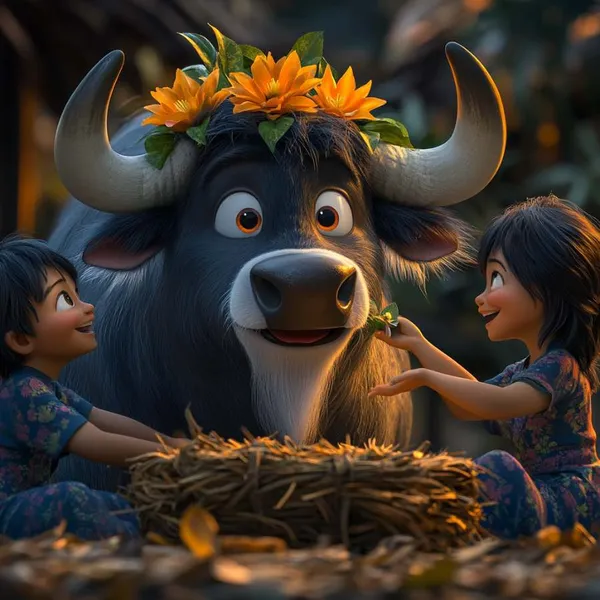
Everyone laughed. The children decorated Barnaby's horns with lotus flowers, and Grandpa Harold announced: 'We will call this bridge Barnaby's Bridge, in honor of our friend who taught us diligence and community.'
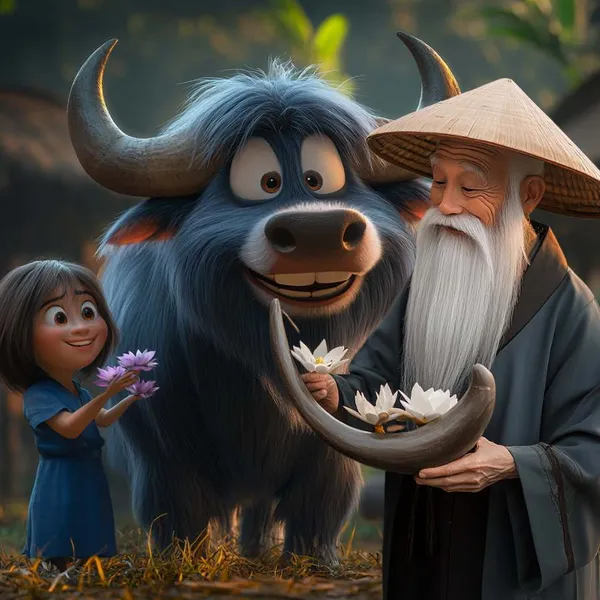
From then on, the bridge connected not only the banks of the river, but also the hearts of the villagers. Children from the west bank ran to school, traders from the east hurried to the market, and Barnaby no longer lazed around – he helped the village in everything.
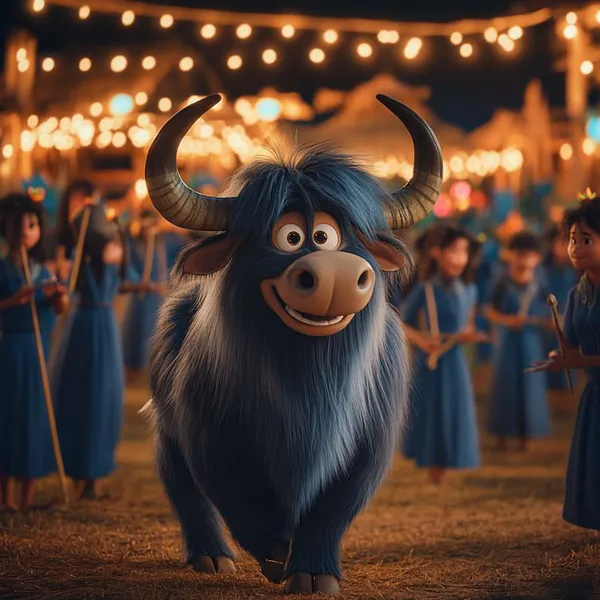
Every year on the anniversary of the bridge's completion, the villagers held a festival. They wore bright *áo dài* – traditional Vietnamese dresses – and danced to the sound of bamboo flutes. Barnaby was also an honored guest, and he always got the biggest bowl of phở.
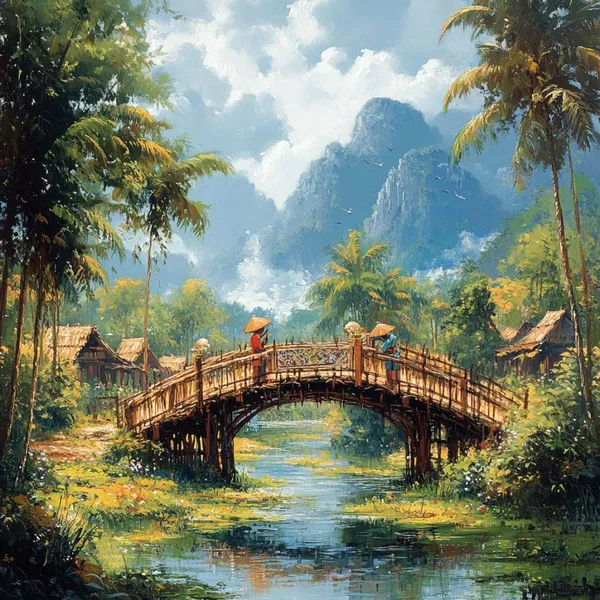
And when someone in the village started to be lazy, they said to him: 'Don't be like old Barnaby! Work with us, and we'll build more than one bridge!' Barnaby, hearing this, only snorted and pretended to be offended, but in his heart he was happy.

So Bamboo Creek became a symbol of unity and hard work. And even today, if you walk across Barnaby's Bridge, the old bamboo railings with dragons will tell you this story – a story about how a buffalo and people learned to work together.
The End
Did you like this story?