The Cricket
Have you ever heard something "chirping" or "singing" in the evening, especially in the summer? It's most likely a cricket! These small insects love to sing and have many amazing secrets. Let's learn more about them!
What is a cricket?
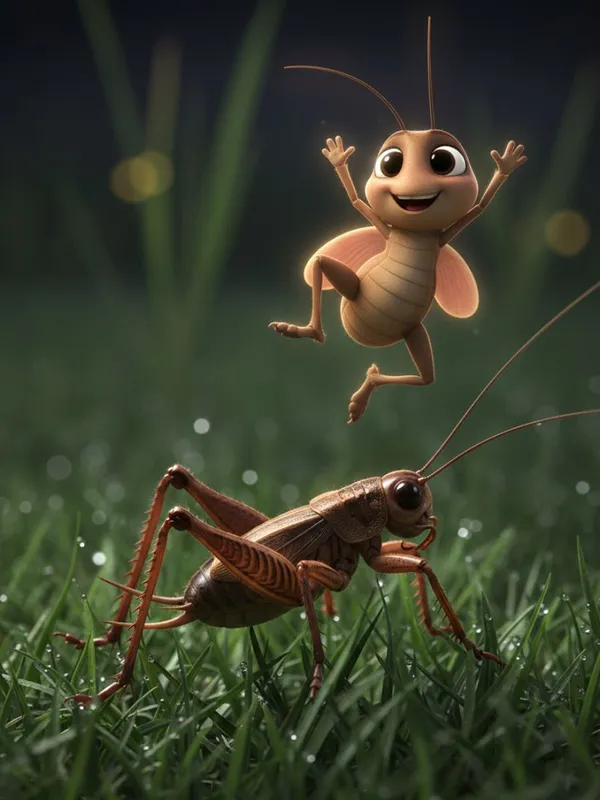
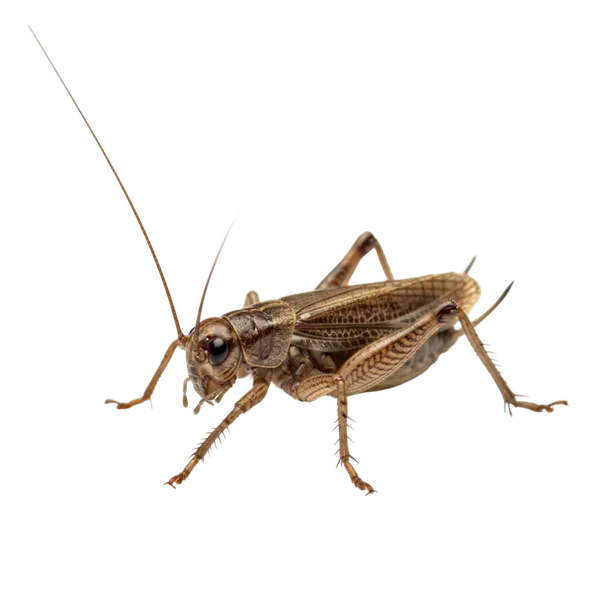
The "jumpers" family: A cricket is a small insect belonging to the order Orthoptera, just like grasshoppers or locusts. They are easily recognized by their strong hind legs, adapted for jumping, and antennae that are often longer than their bodies. Crickets are nocturnal creatures active at night when most other insects are asleep.
How does a cricket "sing"?
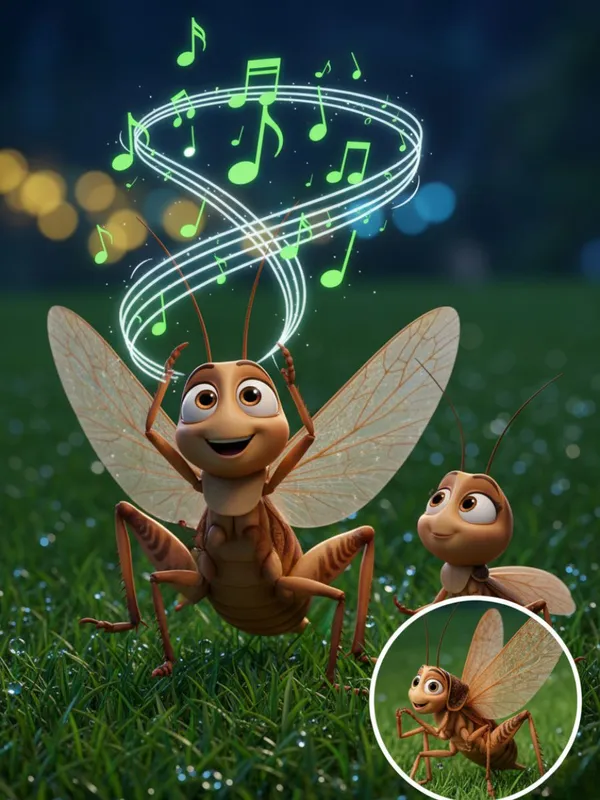
A real musician! The cricket's most famous feature is its amazing "song" or "chirping." But only males sing! They don't do it with their mouths, but with their wings: one wing has a special "file" and the other a "scraper." By rubbing them together, the cricket produces its famous trills. This is its way to attract a female and drive away rivals.
Different "songs":
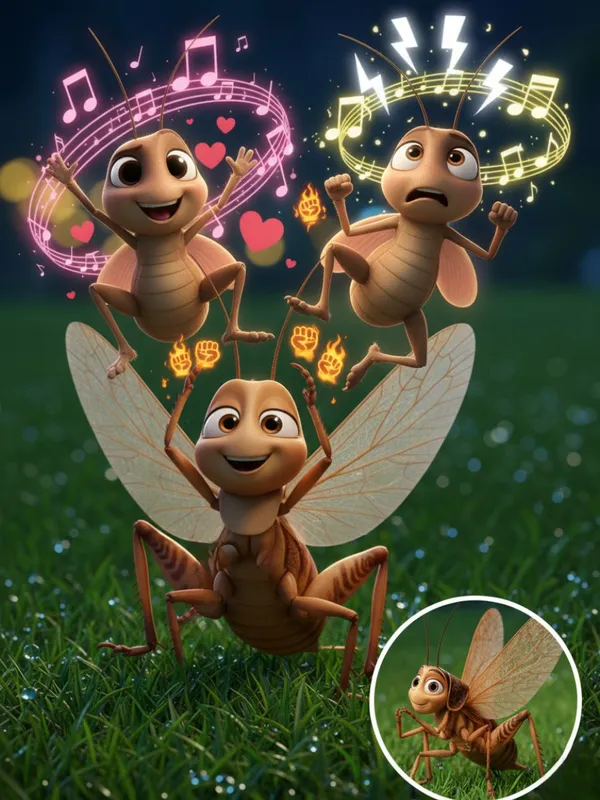
What do they mean? Crickets don't just "chirp." They have an entire system of "songs"! There is a "love song" to attract females, a "battle song" to scare off other males, and an "alarm song" when the cricket senses danger. Each "melody" sounds different, and other crickets understand it perfectly. It's like a whole orchestra in the night forest!
Where does this little "singer" live?
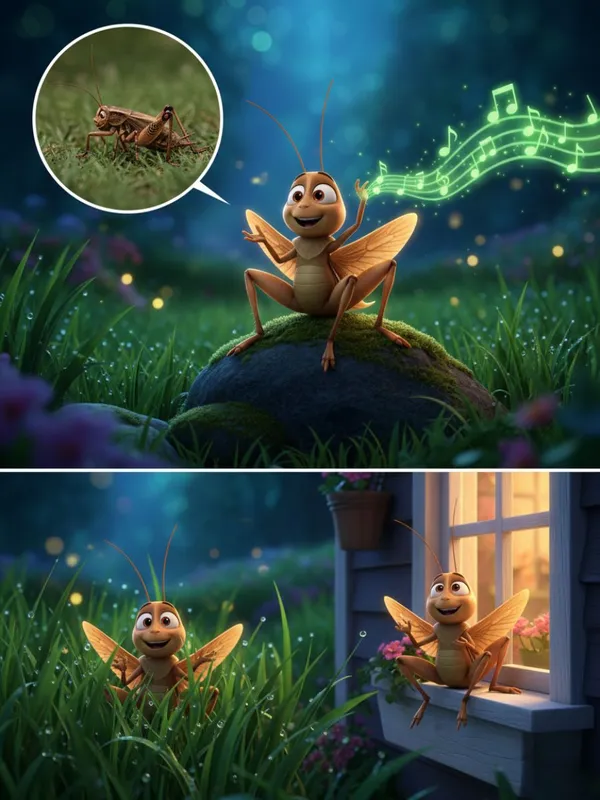
Crickets are very widespread throughout the world; they can be found on every continent except Antarctica. They like to live in warm and humid places: in the grass, under rocks, in burrows in the ground, and sometimes even in people's homes. They are especially numerous in rural areas and fields.
Diet:
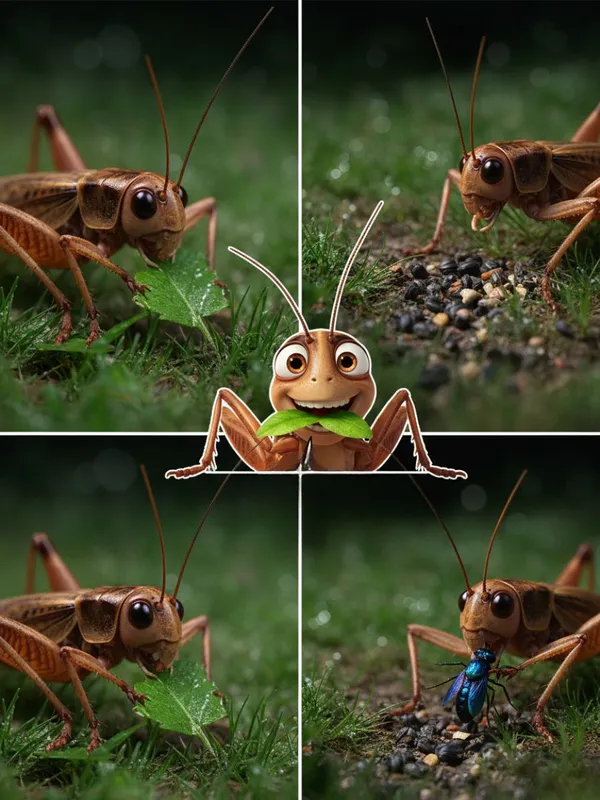
An omnivorous tiny creature: Crickets are omnivorous insects. They eat a wide variety of food: plant leaves, young sprouts, seeds, as well as dead insects and small invertebrates. If they live in a house, they can feed on food crumbs. Thanks to such a diverse diet, crickets can survive in various conditions.
Antennae:
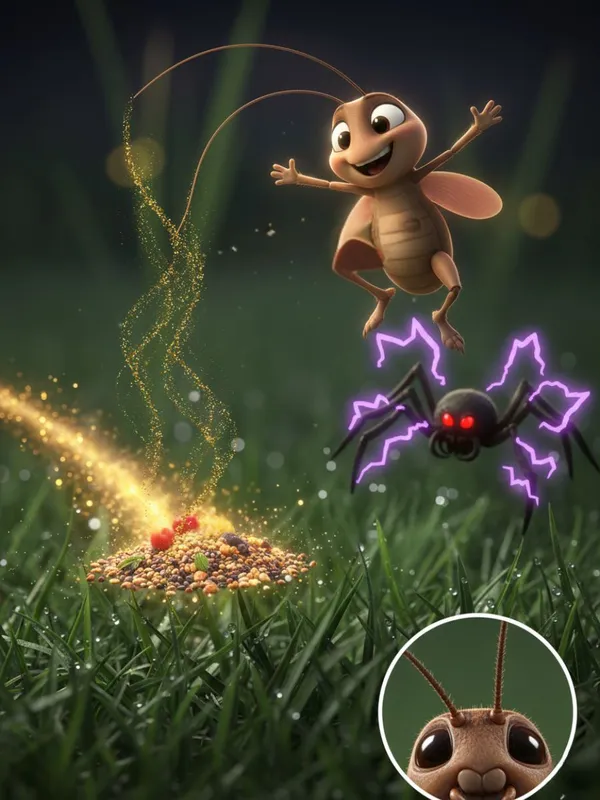
Important sensory organs: Crickets have very long and sensitive antennae that serve as real sensors. With their help, they feel the world around them, search for food, sense changes in the air, and even recognize danger. These are their main helpers in the dark, where vision is not as important.
Jumping:
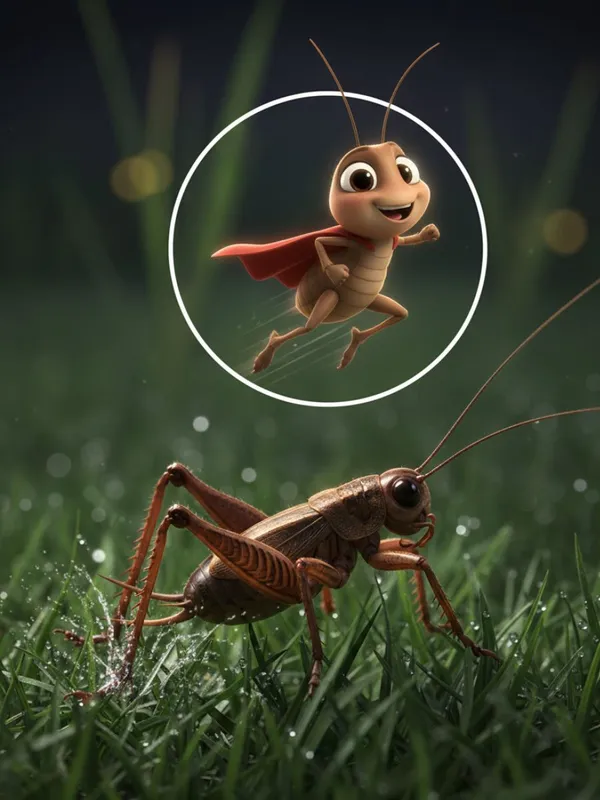
Masters of acrobatics: Like all Orthoptera, crickets are excellent jumpers! Their powerful hind legs allow them to make long and high jumps to escape quickly from enemies. In a single jump, a cricket can cover a distance dozens of times its body length. This is a real lifesaver from birds, lizards, and other predators.
Pet crickets:
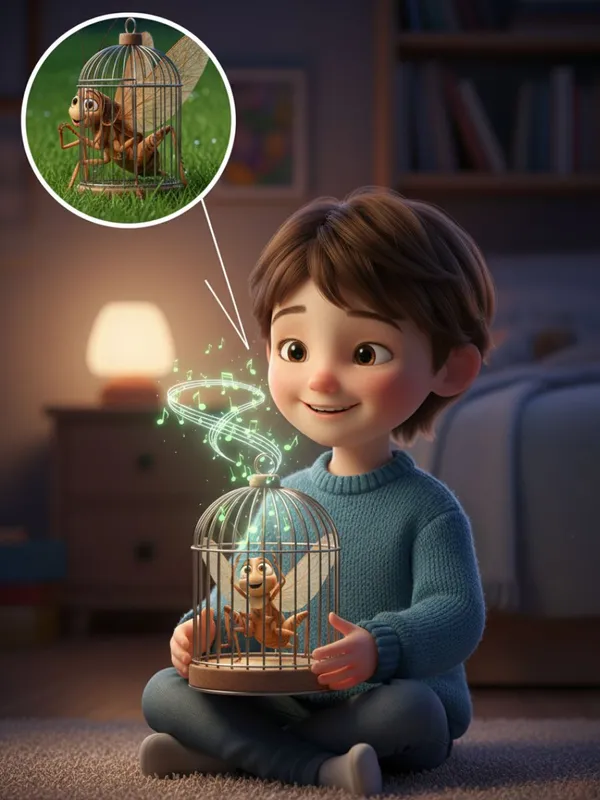
Household pets: In some cultures, especially in Asia, crickets are kept as pets. Their "songs" are considered soothing and pleasant to the ear. Sometimes even "cricket fights" are organized, where males fight each other. This shows how much these little insects are valued in different parts of the world.
Life cycle:
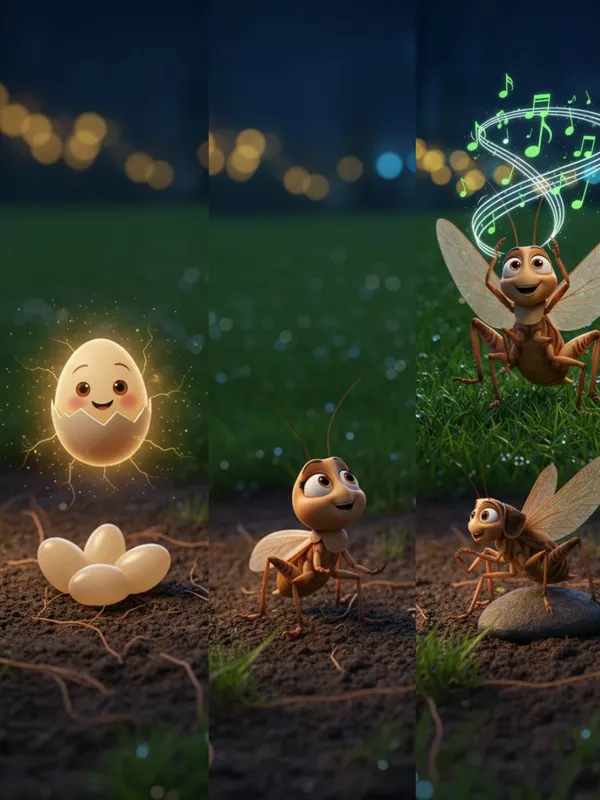
From egg to singer: A cricket's life begins as a tiny egg that the female lays in the soil. A small larva hatches from the egg, looking like a miniature copy of an adult cricket but without wings. The larva molts several times, grows, and finally turns into an adult cricket, ready for "songs" and reproduction.
Crickets in culture:
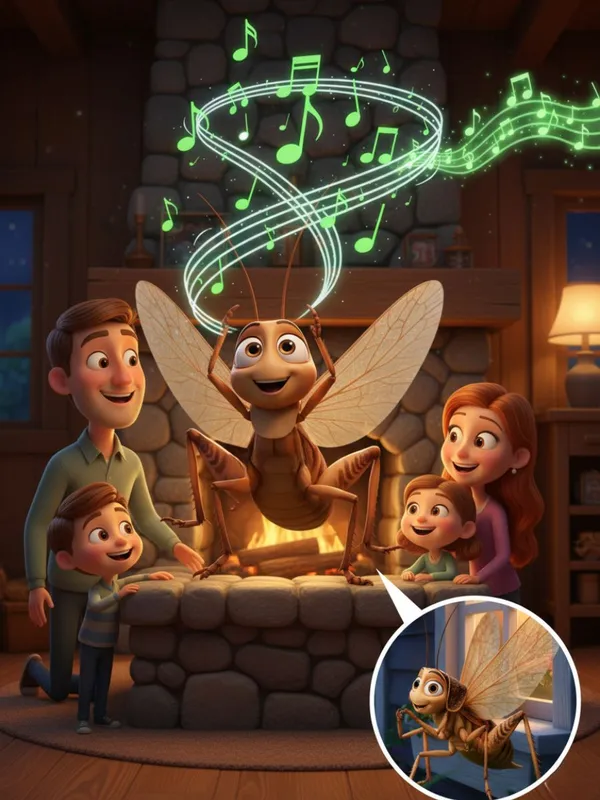
A symbol of luck and home: In many cultures, the cricket is considered a symbol of luck, happiness, and the hearth. It is believed that if a cricket settles in a house and sings, it brings good fortune. If it suddenly falls silent, it may foreshadow something important. These small insects have become part of the folklore and beliefs of many peoples.