Why Does Jupiter Have So Many Moons?
🪐🌙Hello, young astronomers! Jupiter is a giant planet, like the king of the Solar System, surrounded by countless moons! But why does it have so many?
Jupiter: The Giant Planet!
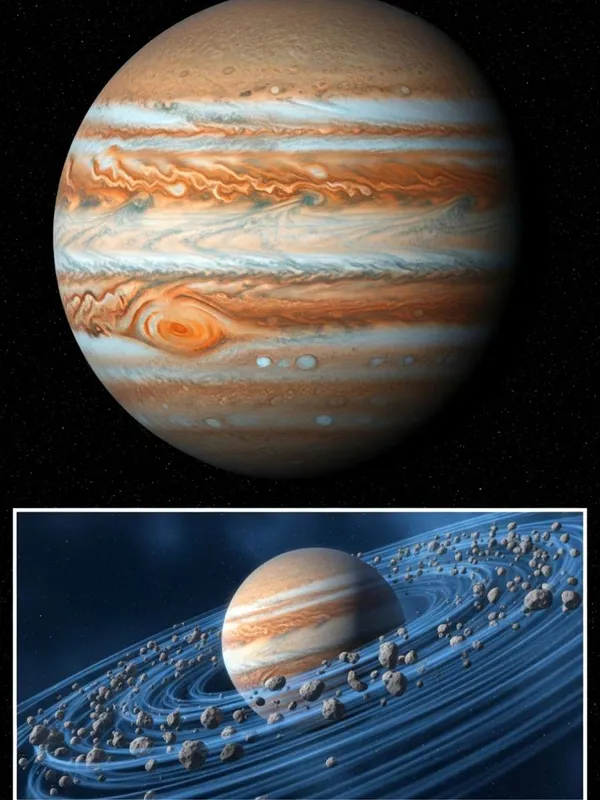
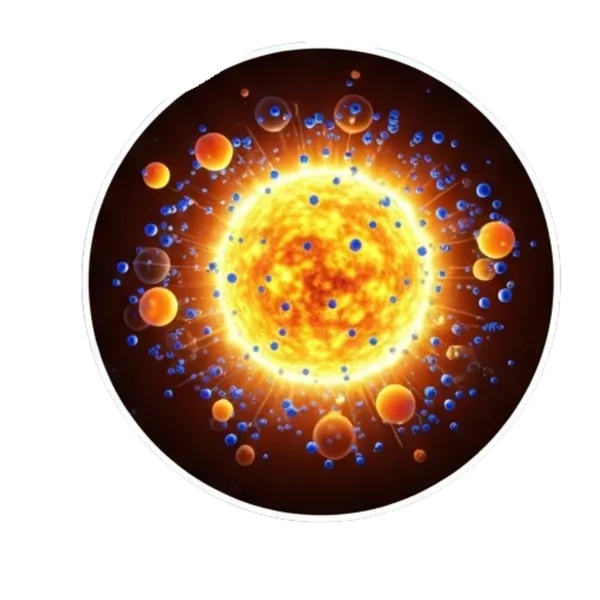
Jupiter is the largest planet in the Solar System, about 11 times wider than Earth. Its powerful gravity acts like a magnet, attracting asteroids and comets, which then become moons—like stars surrounding a stage!
How Many Moons Does Jupiter Have?
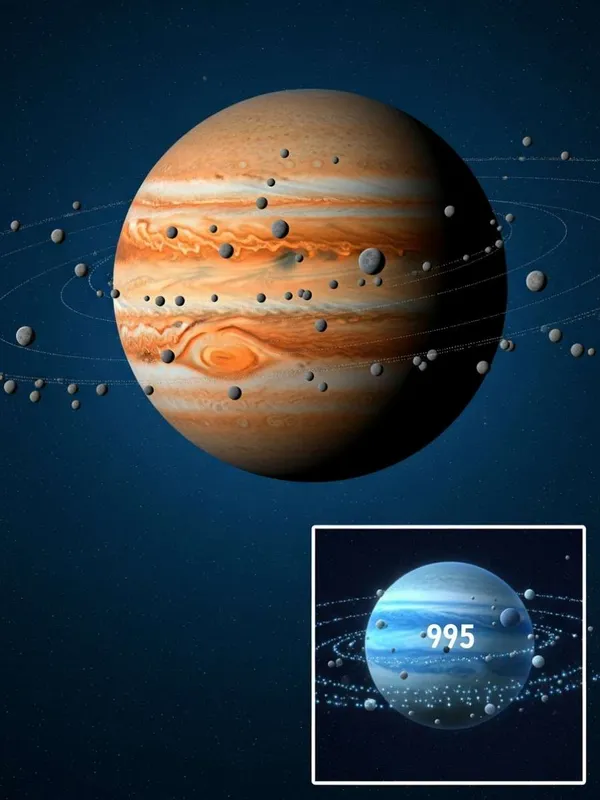
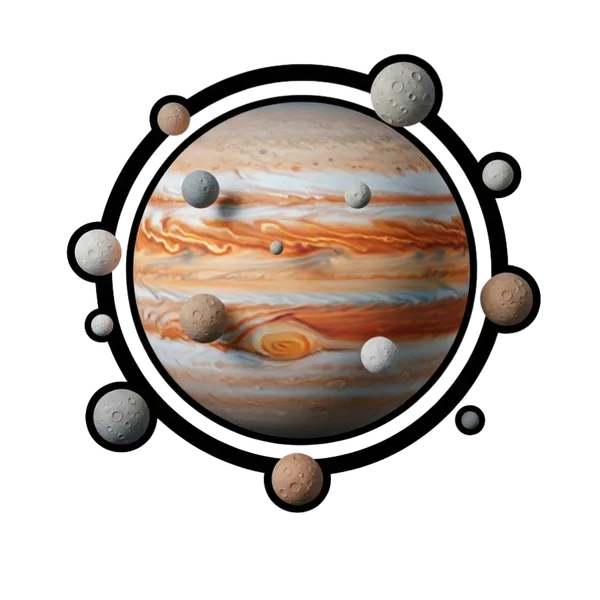
As of 2025, Jupiter is known to have 95 satellites (moons). Of these, 83 have official names, while the rest have temporary designations. It's like a whole team of friends, and scientists keep finding new ones!
Big Moons and Small Moons
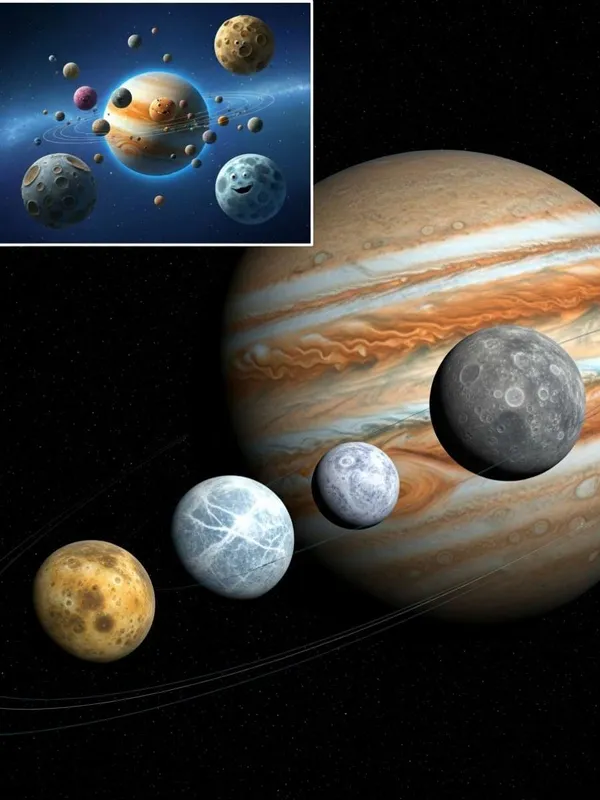
Jupiter has 4 large moons, discovered by Galileo (Io, Europa, Ganymede, Callisto), some of which are planet-sized! The others are tiny, like rocks captured by gravity, almost as if Jupiter were collecting them.
How Did Jupiter Get Its Moons?
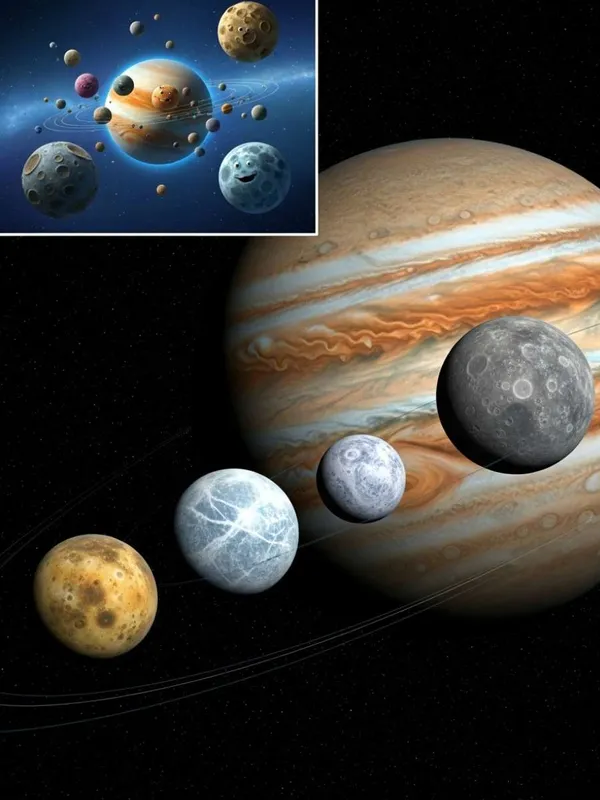
Some moons, like the Galilean moons, were born alongside Jupiter from a cloud of gas and dust. Others are asteroids that were caught in its gravitational trap, like fish caught in a net!
Why Is This Important?
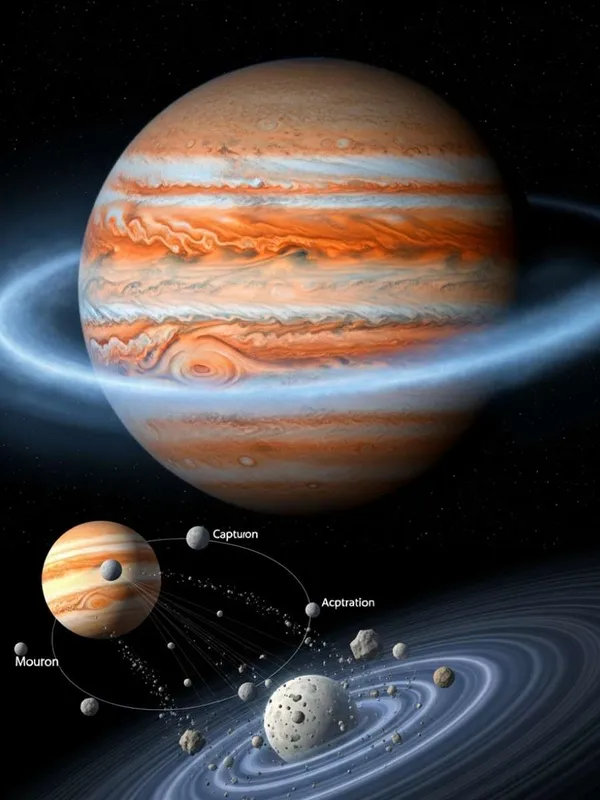
Jupiter's moons, especially Europa with its subsurface ocean, may hold the secrets of life! Scientists are studying them using space probes, acting like detectives to find out if there is water there, or even alien life!