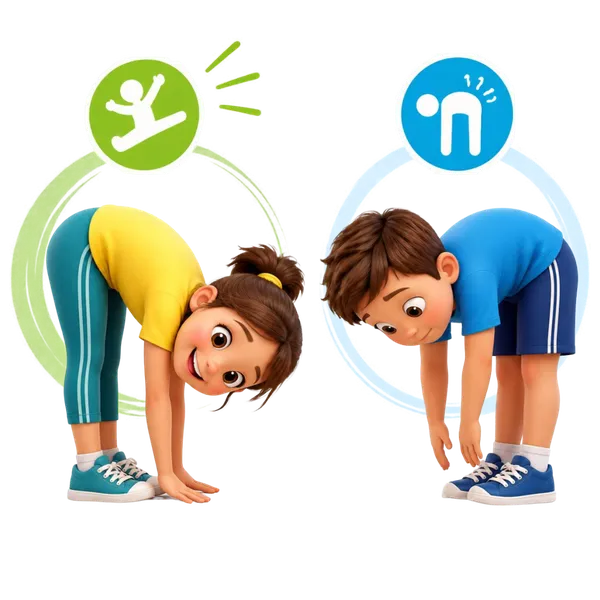
Why Are Some People Flexible and Others Not?
Why can some people easily tie themselves into a knot, while others can barely touch their knees? It all comes down to our 'living construction kit': the amount of flexible proteins in our ligaments, the shape of our joints, and regular training!
🦴 Secret Glue: Collagen and Elastin
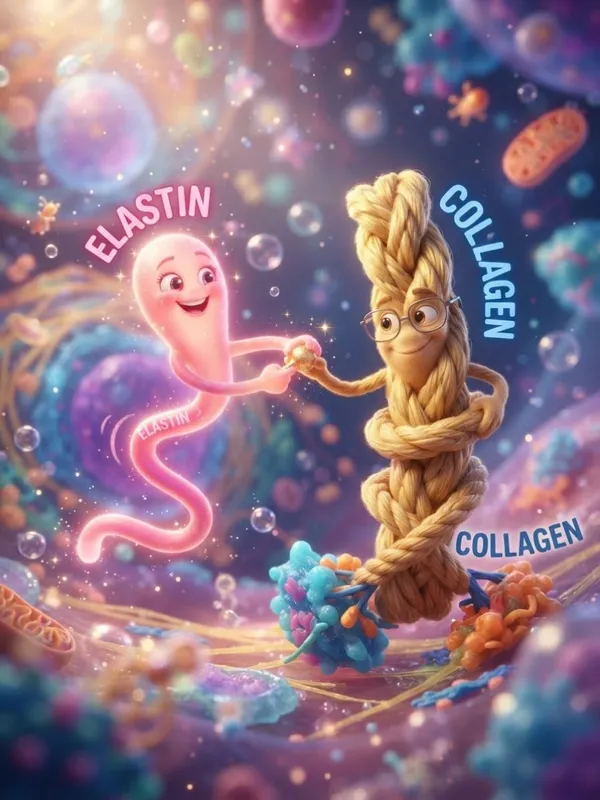
Inside our bodies – in our muscles, ligaments, and tendons – live special thread-like proteins: elastin (which stretches like a soft rubber band) and collagen (which is strong like a sturdy rope). Flexible people naturally have a bit more of the 'stretchy' elastin, while others have more of the 'strong' collagen.
🧱 The Architecture of Joints
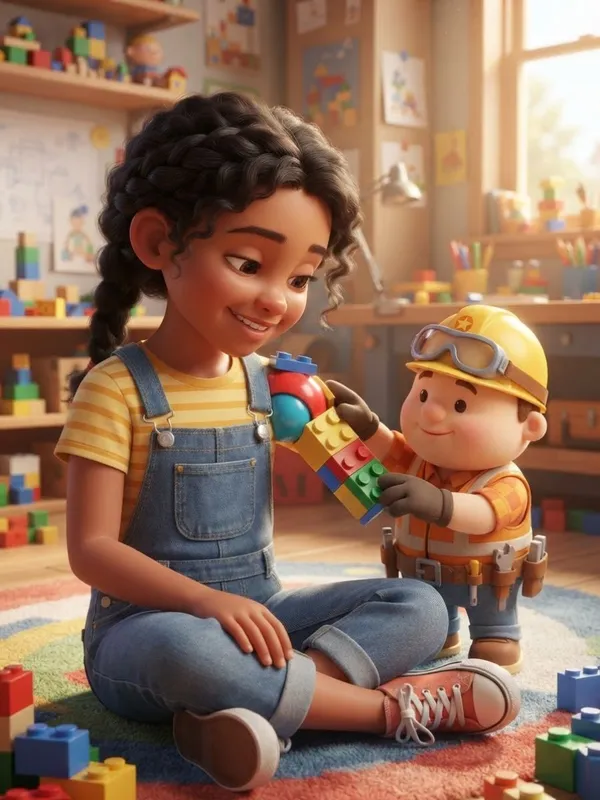
Joints are the places where bones connect to each other (for instance, in the shoulder or hip). They resemble LEGO building blocks. For some people, joint sockets are slightly shallower and smoother, allowing bones to rotate easily and freely within them. For others, the sockets are deeper, causing the bone to quickly hit a 'wall'.
🧠 The Brain, Our Guardian, and Its 'Alarm System'
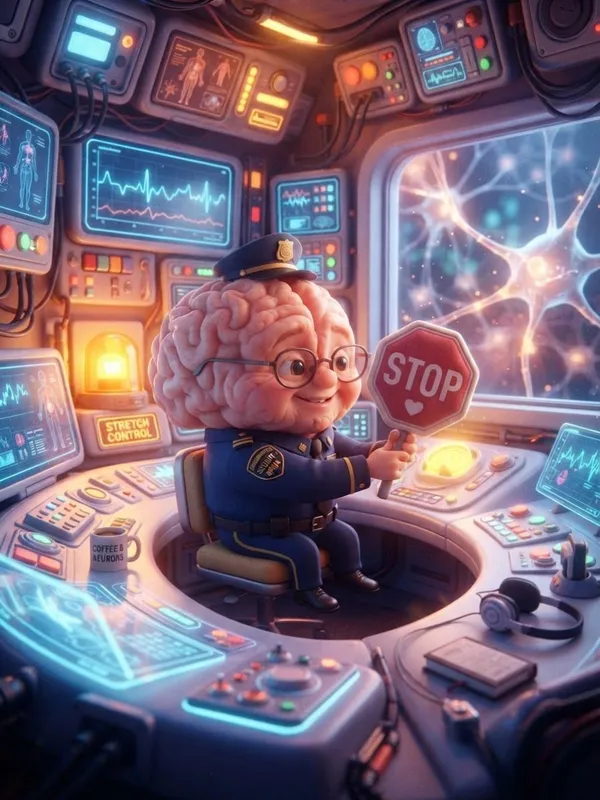
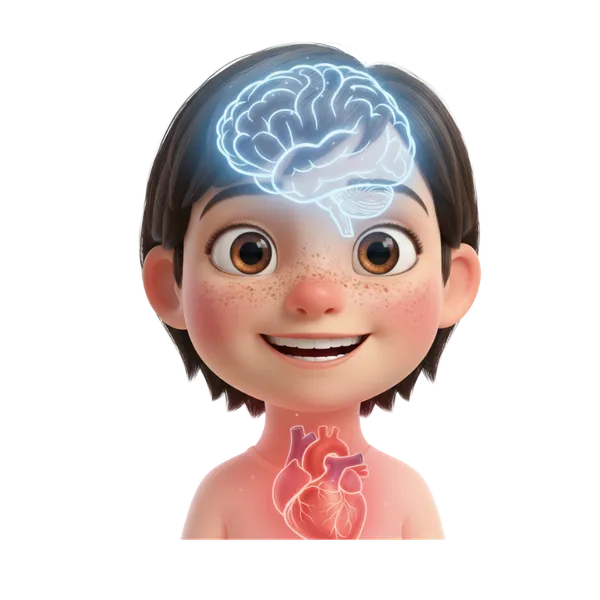
Your brain is very concerned with your safety! When you try to stretch intensely, your muscles send a signal to your brain. If the brain perceives the movement as dangerous, it activates an 'emergency brake' and contracts the muscle, causing an uncomfortable sensation. In flexible individuals or those who train frequently, this 'alarm system' is set to be more relaxed.
🎂 Age and... Temperature!
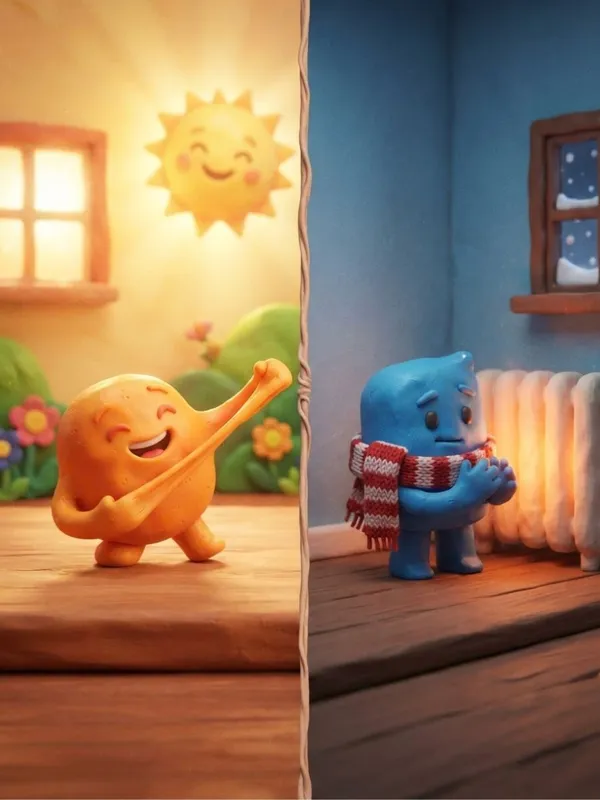
Children are more flexible than adults: In childhood, bones and ligaments contain a lot of water and are very soft, which is why it's so easy for little ones to do splits. Warmth makes us more flexible: In the morning or in cold conditions, muscles resemble hardened modeling clay. But as soon as you warm up (by running or stretching), the 'clay' becomes soft and easily pliable!
🏋️♂️ The Main Secret: Training Conquers All!
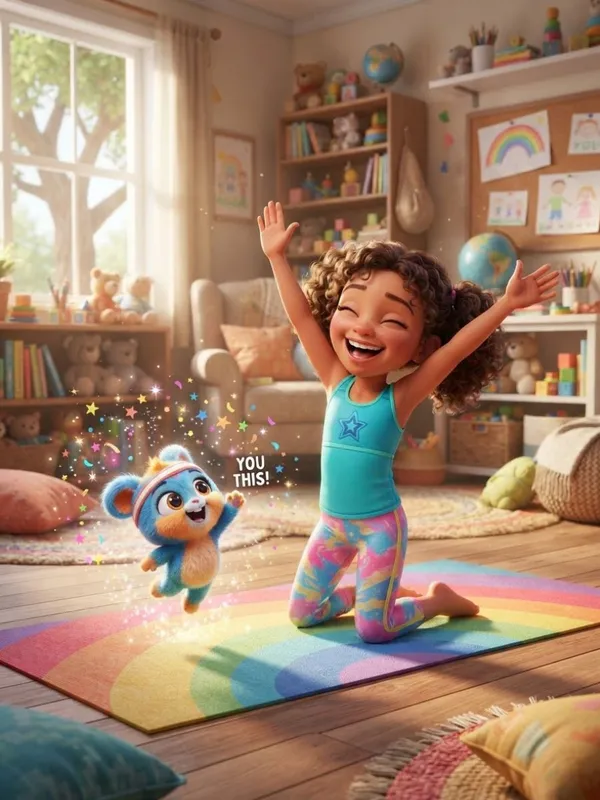
Innate characteristics are only half the story. Flexibility is like learning to ride a bicycle: if you do light stretching and exercise every day, your muscles and ligaments adapt, and so does your brain! Therefore, even someone who is naturally 'inflexible' can learn to perform amazing tricks.