The Rhinoceros
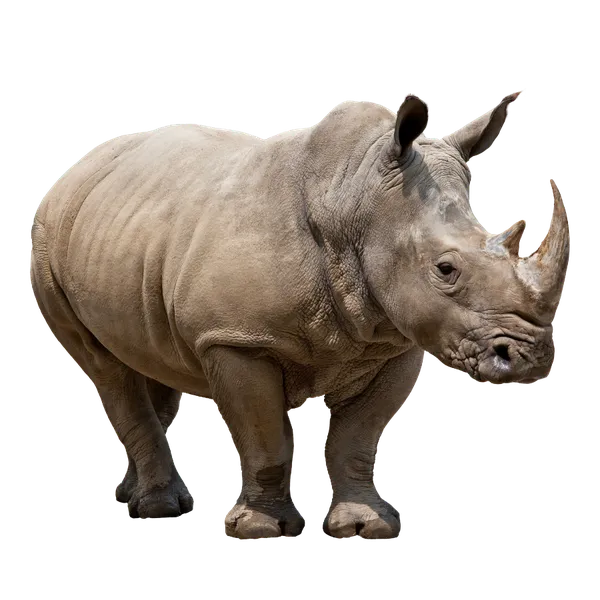
Hello, little explorer! Are you ready to learn all about the rhinoceros – the real tank of the animal world? Let's go! **The Rhinoceros** is a massive and powerful animal, easily recognizable by the horn that adorns its nose. Here are some exciting facts about it:
A Horn on the Nose

The most famous feature of the rhinoceros is its horn, and some species have two!
- The horn is made of keratin, the same material that makes up our nails and hair.
- Joke: Why doesn't the rhinoceros use a comb? Because it has everything "on its horn"!
Size and Weight
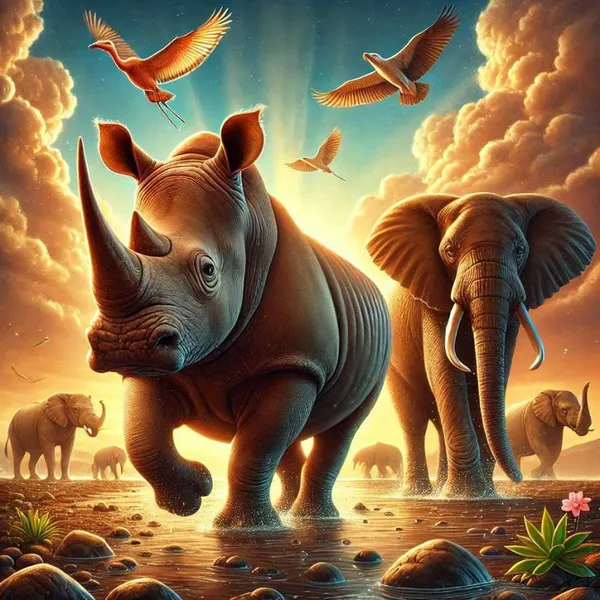
The rhinoceros is one of the largest land mammals after the elephant.
- An adult white rhinoceros can weigh up to 3.5 tons!
- It is about 4 meters long, and its height at the shoulder reaches 1.8 meters. It's a true giant.
Poor Eyesight and Strong Sense of Smell

The rhinoceros has poor eyesight, but it has excellent senses of smell and hearing.
- It relies on its nose and ears to find food and detect danger.
Thick Skin
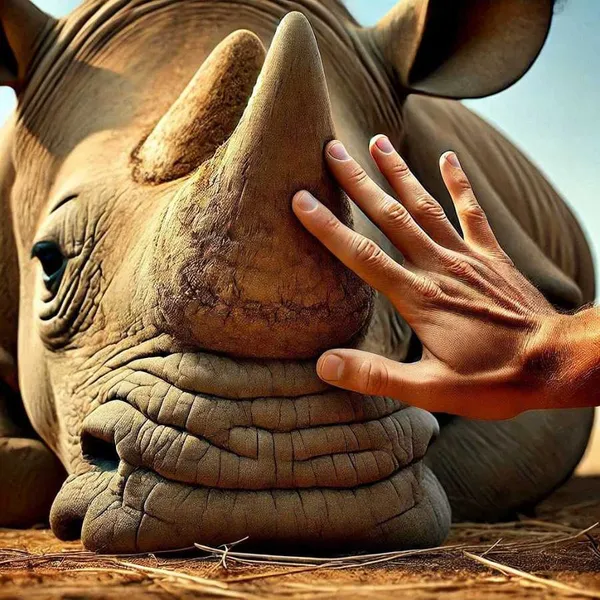
The rhinoceros's skin is very thick and rough, and can be up to 5 cm thick!
- This skin protects it from insect bites and scratches.
Different Types
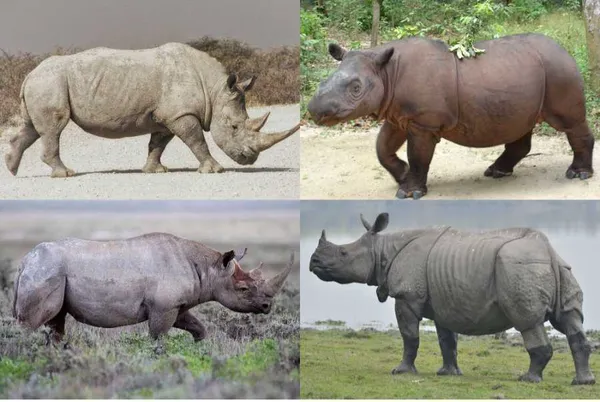
There are five species of rhinoceros: white, black, Indian, Javan, and Sumatran.
- The white and black rhinoceros live in Africa, while the other species live in Asia.
- Interesting fact: The name "white rhinoceros" has nothing to do with its color; it is a distortion of the Dutch word "wijd," which means "wide," referring to the shape of its lips.
Herbivorous Giants
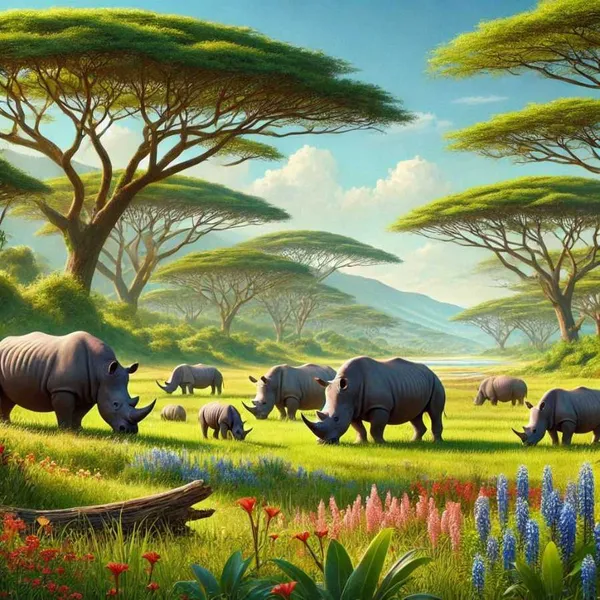
The rhinoceros is a herbivorous animal.
- It feeds on grasses, leaves, and branches.
- It has strong jaws and teeth for grinding tough plants.
Mud Bath Lovers
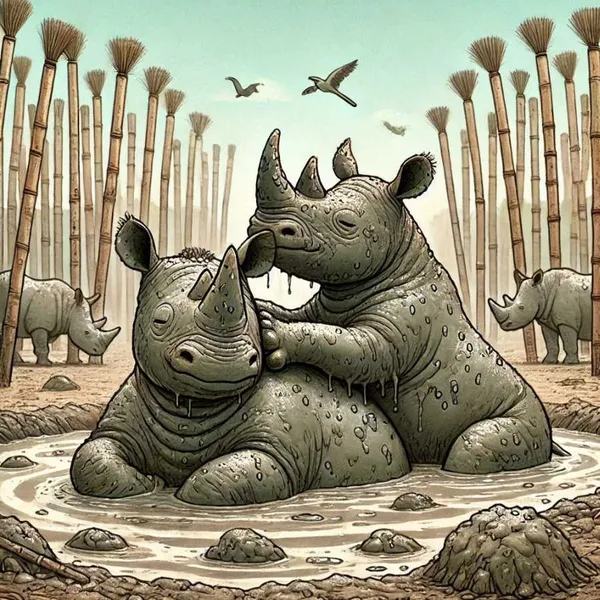
The rhinoceros likes to enjoy mud baths.
- Mud helps it cool down on hot days and protects its skin from parasites.
On the Brink of Extinction
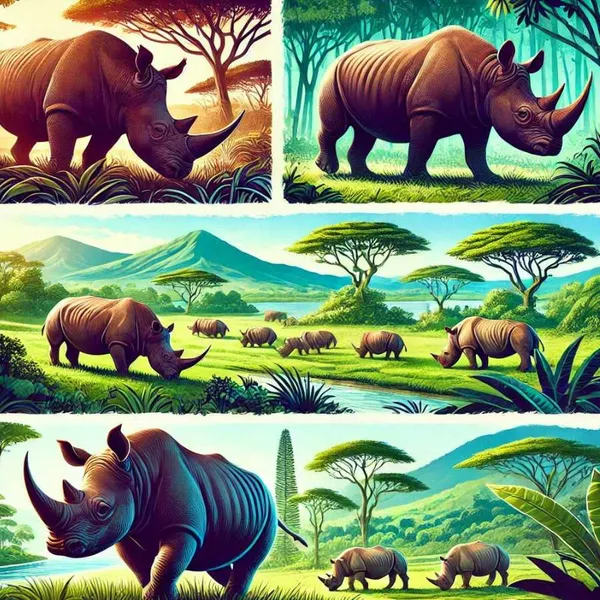
Unfortunately, due to poaching for their horns, many rhinoceros species are threatened with extinction.
- Their horns are used in traditional medicine, leading to continued illegal hunting.
- It is important to remember that protecting the rhinoceros is essential!